Written by: Krupal Mehta, Mumbai, Maharashtra
Edited by: Khushi Vaid, Delhi
The discovery of South Korean traditional masks intrigues us with the history and culture associated with them. Korean Masks, known as Tal, are primarily used in cultural activities. They fall into two categories: religious masks and artistic masks. They are also worn during wars, collected as souvenirs, and used in dance rituals. In today’s modern world, one can find these Korean masks in Seoul’s vibrant and famous Insa-dong. Government-recognized artisans tirelessly carve these brilliant pieces by hand, many of which are traded with overseas buyers.
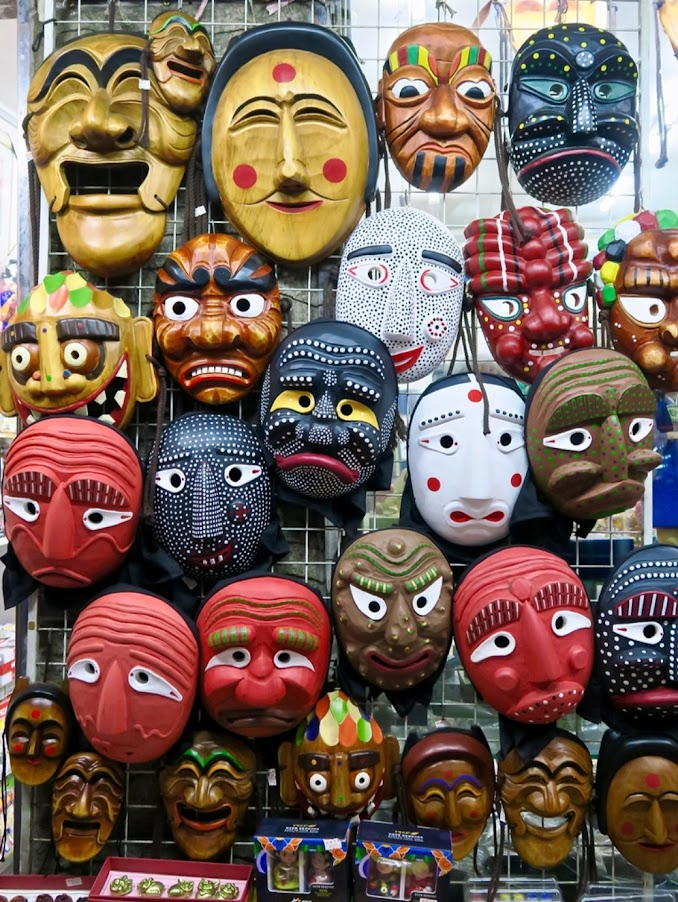
Different Types of Masks and Their Characteristics
Religious Masks are used to ward off evils and dance masks are used in performances. For Koreans, Tal resembled a sacred symbol of God, hence it was used for religious purposes, and they were believed to ward off danger. The dance and singing now resemble the performances in the past which were performed in villages to worship and maintain peace in the village.
Masks originally held sacred significance in shamanistic rituals. However, as civilization progressed, their purpose evolved to encompass entertainment and artistic expression. By the fourteenth century, masks had gained widespread acceptance as sources of joy and excitement during festivities. This shift in function led to the creation of Talchum (mask dance) and Talnori (mask play). The wonderful masks and mask dances of Korea include the Haeseo Talchum of Hwanghae Province, Sandae Nori of Gyeonggi Province, Ogwangdae Nori and Deul Nori of the Nakdong River areas are famous throughout the world.
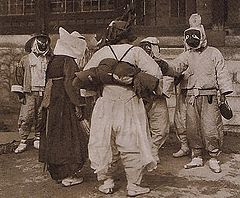
Picture Credits: Wikimedia
Korean Mask Symbolism
Korean masks are grotesque and vividly coloured which is a unique feature of their mask, they are coloured in bright colours. These colours are vital in knowing whether the wearer is young or old. Dark and black coloured masks are for elder characters whereas bright and red are for young characters, and white coloured masks are for the young female character. To illustrate the character’s duplicity, masks are sometimes painted as half red and half white. Based on personality also the colour of masks plays a significant role as, a red, darkly-coloured mask signifies recklessness and aggression; a yellow or lightly colored mask depicts folly and ineptitude; and a black or darkly colored mask represents anxiety and social marginalization.
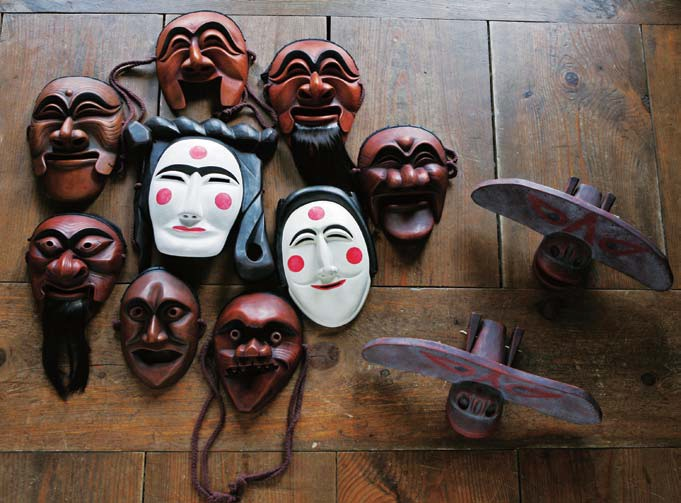
Picture Credits: Korea.net
Dive Deep into the History
The Bongsan Talchum is one of Korea’s most representative mask dances. It consists of seven acts and includes dialogue, dance, and music. The performance blurs the line between the stage and the audience, allowing the audience members to freely participate. This unique connection between the actors and the audience makes this traditional Korean performing art distinct. In Bongsan Talchum, Malttugi, the main character, serves an upper-class household (Yangban). The performance criticizes and satirizes the upper-class, rebel Buddhist monks, and authoritarian, patriarchal men, giving voice to the struggles of the commoner class and their resistance. These were radical ideas to convey at the time. In mask dance, people can put out their suppressed emotions to the world in an artistic way, hence Koreans tend to enjoy mask dance the most.
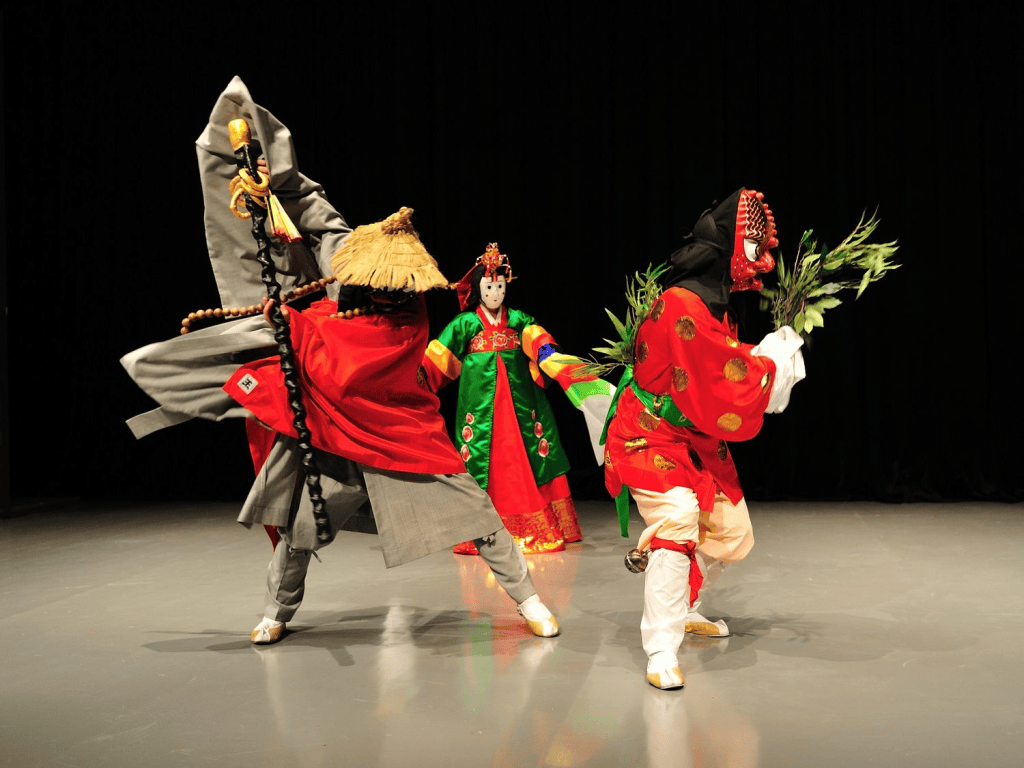
Picture Credits: Korean Cultural Center New York
Hahoetal Masks are the traditional Korean masks worn in the Hahoe Byeolsingut Talnori. They are considered a treasure of Korea and are displayed in the National Museum as well. They are famous and beautiful masks representing Korean culture. There are twelve masks of hahoetal and nine are counted as national treasures of Korea. The twelve masks represent twelve characters needed to be performed. They are Kakshi, Chung, Yangban, Choraengi, Sonbi, Imae, Pune, Paekchong, Halmi, Ttoktari, Pyolchae and Chonggak.
Korea presents two sides of itself- the modern tech-savvy side and the other which is full of beautiful cultural aspects. Tell us about your thoughts regarding Korean Traditional Masks in the comments.


Never knew this much about it. Thanks to hallyuism ❤
I wanted to know about traditional masks as I only knew about hahoetal before! This article surely helped me to know deeply! Well written!
wowwww
Fascinating! It is great to know the local sources of inspiration to artists in South-Korea.
Impressive 🎭🤩
Such a vibrant article it is. Got to know about so many traditional masks ❤️
Wowwwww
❤️
Wow! This is something new I got to know
Fascinating article
The vibrant colors and expressive designs of South Korean traditional masks beautifully reflect the country’s rich cultural heritage and artistry✨ I love how Korea seamlessly blends both modern and traditional culture, maintaining a perfect balance🙌💖
Interesting 😍
Great article 👏 👍 – Samruddhi Pare
Amazing 😍
They are really unique😍😍
Wow interesting article 👏 💜
Never knew korea had a history with masks! This article is very informative!
Wowww ❤️
Love korean traditions
Thanks to this article I got to know about the significance of masks in Korean culture.
Quite an interesting article.
Fabulous article really informative 👏 💜
Got to know so many New things
Mask 🥰❤️✌🏻
interesting❤️
Lpve how it encapsulate the richness of the country’s cultural heritage, offering a window into its history, beliefs, and artistic traditions.
A very informative article. Loved to see the history of Bongsan Talchum, which is a sort of movement similar to the Angry Young Man movement
Interesting
Knowledgeable article
Knowing smthng new
Waooo
Such an greate article as a glimpse in korean masks history.
Impressive 🤩
I never knew Korean masks carried such deep symbolism, and this article really opened my eyes to their cultural richness. The way colours reflect personality and age is honestly so fascinating. I especially loved learning about Bongsan Talchum and how it gave a voice to common people. It’s amazing how Korea blends its tech-driven side with such profound traditions.
The bold colors and striking expressions of South Korean traditional masks are a powerful reflection of the country’s deep cultural roots and artistic excellence. Each design carries history, symbolism, and emotion, showing how rich and meaningful this heritage truly is. What I admire most is how Korea effortlessly weaves tradition into modern life, preserving its cultural identity while continuing to evolve. This balance between the old and the new is what makes Korean culture so unique and captivating