Writer: Suparna Mitra (Kolkata, West Bengal, India)
Editor: Tahoora Charfare (Fahaheel, Kuwait)
“Mythology is like Gravity, inconvenient with time, but necessary for Cohesion.”
– Elizabeth Janeway.
Every culture imagines its culture in a different way, which is why myths are also different in every culture. In historical K-Dramas, K-Movies, we have heard of many myths and folklores which were very popular, and some are related to the history of Korea. Let’s know about some of them to explore the ancient culture of Korea.
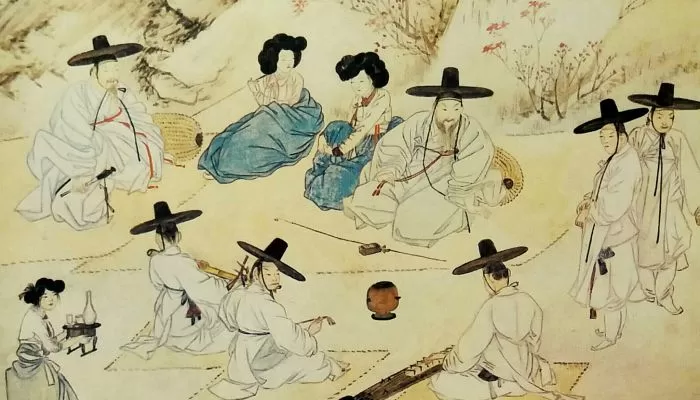
Picture credits: mythology.guru
Literary Mythology
There are recorded myths that can still be found in modern literature and are related to the foundation of the three main kingdoms of Korea: Goguryeo (Joseon), Silla, and Baekje. So let’s begin.
Dangun (단군)
In history, Dangun is the founder of the first Korean kingdom, Gojoseon. He is described as the God king and the first man of Korea. It makes us wonder why he was called a God-king, right? It’s related to his supernatural birth. It’s said that he was the grandson of the lord of Heaven, Hwanin. Hwanung (환웅), younger son of Hwanin, who yearned to live on the earth and founded the “City of God” (신시). A tiger and a bear prayed to Hwanung that they wanted to become human. Hwanung gave them twenty cloves of garlic and a bundle of mugwort, ordering them to eat only this sacred food and remain out of the sunlight for 100 days. The tiger gave up after about twenty days, but the bear persevered and was transformed into a woman, Ungnyeo (웅녀). Later, Hwanung married Ungnyeo. Dangun was their offspring, the first man of the Korean peninsula. Dangun is also known as Dangun Wanggeom (meaning the lord who governs the society). Every year, both North and South Korea celebrate 3rd October as the National Foundation Day. Gaecheonjeol (The day the sky opened) is the legendary formation of the first Korean state of Gojoseon in 2333 BC. Although the North Koreans do not have a holiday on this day, the South Koreans celebrate this day with a public holiday.

Picture credits: mythology.guru
Jumong (주몽)
Jumong is related to the foundation of the Goguryeo dynasty. Jumong is also known as Dongmyeong of Goguryeo. He was the son of Hae Mo-su (해모수) and Yuhwa (유화), who was the daughter of Habaek, the god of the Amnok River. Jumong means a good archer. In reality, it said that he was such a good archer that he could even shoot a fly in the air. Jumong left on his horse to follow Hae Mo-su’s dream to unify the Gojoseon kingdom, which had been broken up as a result of the Han Dynasty’s interference, and rescue Gojoseon’s population. He entered the land in the south of the river and later became the first king of Goguryeo. He has been given many names with the title Dongmyeong the Saint.

Park Hyeokgeose (박 혁거세)
Park Hyeokgeose was the first king of the Silla Dynasty of Korea. It says that after the Gojoseon dynasty, the refugees of that kingdom started to live in a valley, which is the current Yangsan province of South Korea. One day, six village heads of the villages were discussing the foundation of a new kingdom in the Yangsan forest. When they saw a bright light coming from the sky, when they went close in the forest, they found a white horse leaving a big egg near a well. A boy came out of the egg, and when bathed, his body radiated light. The chief raised him and made him king when he became 13 years old. The state was named Seorabeol, later Silla. Hyeokgeose was the progenitor of the Park (bak,박) clan in Korea (one of the three popular clans).

Picture credits: Korea.net
Suro of Geumgnum Gaya
In Samguk Yusa, the foundation myth of one of the most powerful Gaya kingdoms had been recorded. The nine chiefs of Gaya got the command from heaven to find a kingdom there. After singing and dancing as commanded by heaven, a golden chest wrapped in red cloth descends from heaven. Six golden eggs had been found in the chest. The eggs hatched into giant boys, who matured in merely two weeks. On the fifteenth day, they became the kings of the six provinces of Gaya. The first to hatch, Suro, became king of Geumgwan Gaya. After getting defeated by the leader of the Seok Clan (another popular clan of Korea), Seok Talhae, he fled to Silla.

Picture credits: koreatourinformation
Other than literary myths, there are many folklores and legends too
Moon Rabbit of Chuseok
The legend of the rabbit on the moon is a timeless tale that has been passed down through generations, captivating the hearts and minds of people across the world. The enchanting story originates from the observation that the markings on the moon bear a resemblance to a rabbit standing under a cinnamon tree. This visual connection has sparked imagination and inspired numerous adaptations of the tale.
According to the legend, the Rabbit, along with a Fox and a Monkey, resided in a village and dedicated themselves to the study and practice of Buddhism. Their commitment and devotion to their faith were put to the test when the Emperor of the Heavens requested food from them. In a display of unwavering faith, the Fox caught a fish, the Monkey gathered fruits, and the Rabbit, unable to find anything but grass, selflessly offered itself by jumping into a fire to provide sustenance.
Moved by the Rabbit’s profound sacrifice and unwavering devotion, the Emperor appointed the Rabbit as the guardian of the moon. In modern-day adaptations, the story often depicts two rabbits on the moon joyfully making rice cakes, adding to the significance of the tale, particularly during the mid-autumn festival when friends and family gather to celebrate. The enduring resonance of the rabbit on the moon legend serves as a poignant reminder of selflessness, sacrifice, and the enduring power of faith and commitment. It continues to be celebrated and cherished as a symbol of hope, unity, and the enduring bond between loved ones.

Picture credits: Behance
Dokkaebi (Goblin)
If you are a fan of Korean dramas, you surely would know about Goblin. Nature deities or spirits possessing extraordinary powers and abilities that are used to interact with humans, they are also called guardian angels. They love to play pranks on people. They often punish the wrongdoers and reward the good people with riches. Unlike the handsome portrayal in the dramas, the Goblins are very scary to look at; they are described as dwarfs with horns.

Picture credits: mythology.guru
Haechi
The creature is a bit odd-looking with the body and head of a lion, scales covering its entire body, and curved horns on its head. This creature is the symbol of the city of Seoul and is also known as a guardian, warding off evil omens. The Haechi statues can be seen at the entrances of palaces and other historical places in Korea, as they prevent fire and are a good omen for preventing natural disasters.

Picture credits: mythology.guru
In Korean culture, there are lots of legends and myths. I hope you will like the story of myths and start to find out more myths after reading the article. Have you heard of any of these myths from South Korea? Are there any myths that are closely related to Indian myths? Do let us know in the comments section.


Such an informative article 👏
Very informative, Love learning about different cultures and their myths 🕵🏻♂️🤫
Ohh wow it was fun to read about the myths!
Wow…it was fun to read about the myths
Wow.It gives us deep insights into tbe untouched Korean Culture
I’m a fan of k- culture and k- history, and I’ve heard about these myths before especially the 당근 one and the goblin one. And through this article I also got to know about the haechi, I’ve seen that statue so many time but I didn’t know the meaning behind this but now I know. This article is so good and very informative.
This article is amazing! I loved learning about Dangun and the story of the bear turning into a woman—it’s such a fascinating origin story. The Moon Rabbit legend really stood out to me because of its message of selflessness. I also didn’t know about Haechi before, and now I understand its importance as Seoul’s guardian. Very informative and fun read!
This one was such a fascinating read! I loved how you connected Korea’s myths to its cultural roots, the story of Dangun and the Moon Rabbit especially stood out to me 🍃🐇. The way you explained each myth made it feel like I was reading a blend of history and fantasy. And yes, I actually noticed some parallels between Korean and Indian myths too, especially the divine births and nature spirits. Would love to read more like this! ✨
This was such a fascinating read — I had heard a bit about Dangun, but the myth about his birth from a bear who ate garlic is wild! The story of Haechi as a city guardian is also really cool — makes me appreciate how deep Korean folklore goes. I loved how the article mixes both legendary figures and mythical creatures. Definitely makes me want to read more about these myths.
Till now I have only heard about goblin from k drama and sura of gaya dynasty from our literature books, this the first time of mine to know about hwanin, and dangun type of myths. Now I can totally understand and get it why in korea there are so many supernatural dramas and significant time travel story lines. Purely informative and fascinating article. Have also seen daechii in some photographs but never knew that it holds such a significant meaning and power to defer omen.
It was really fun to read about korean myths. I believe every country has it’s own myth and cultural believe. But I was really fascinated by moon myth even I have heard of it somewhere . And the birth myth similar to Indian one’s. I really love how you guys always manage to make your article love.
I never thought that South korea also has a myths story like India did I really like the habeak one and yes I can say that the last one creature why I’m founding it like lord Vishnu’s narsimha avtaar like he also has a body of human and head of lion and he is gurdian to because in that avtaar he protects his beloved devotee prahlad. The rabbit tale I totally agree with that because I remembered the one episode of doraemon where the potray that myth to make happy shizunka’s cousin and their rabbits are tired so doraemon and gian wears the rabbit costume and makes the rice cakes even I remembered the same story I heared in Lee min Ho’s popular drama ‘The king eternal monarch’ where female lead asked the king is you also believe about the story of moon rabbit 🐰 and then lee gon replied rabbits are not live on moon arts student I enjoyed this scene 😁 finding out different myths of south korea is really takes lots of R&D thnks for giving us so much information about these myths.
It was very informative and well written. There are so many unique myths in Korean folklore and they are so different from Indian folklore and that makes it more interesting to read about specially about the origins of different kingdoms. The myth about rabbit on moon is so sentimental and inspiring.
I just finished reading your article on popular myths in Korea, and I honestly loved every bit of it. The way you explained each myth so clearly while keeping the excitement alive shows how talented you are as a writer. Your research, your storytelling, and the way you made the culture feel alive everything was truly impressive. It’s not easy to present traditional beliefs in such an engaging and modern way, but you did it beautifully. Keep writing with this passion, because your voice has the power to teach, inspire, and connect people to new cultures. I’m genuinely looking forward to your next article!
This article was amazing Dangun’s story, the selfless Moon Rabbit, and Haechi as Seoul’s guardian all made Korean legends fascinating and memorable.
The Moon Rabbit myth is so wholesome but also kind of sad? 🌙🐰 The idea of selflessness and sacrifice leading to him being the guardian of the moon is beautiful.
Also, I definitely didn’t know about the ‘golden eggs’ origin for the Gaya kingdom! It’s fascinating how many of these myths tie into the actual founding of Korea’s dynasties. And of course, the Goblin (Dokkaebi) is a classic—though I prefer the handsome drama version! 😉
Reading myths about different places and times is always intriguing for me. Loved reading this article!
I loved how this article dives into myths that many people believe about Korea and then explains the truth behind them. It’s refreshing to read something that clears up misconceptions while also celebrating Korea’s rich culture and traditions. Articles like this help build a better understanding of Korea beyond stereotypes. A great read for anyone curious about what’s real and what’s just myth!
This is such a fascinating read! I already knew a bit about Goblins and the Moon Rabbit from K-dramas, but learning about myths like Dangun, Jumong, and King Suro really adds so much depth to Korean history and culture. It’s interesting how many of these stories connect divine origins with the founding of kingdoms—feels similar to myths from India too. Makes watching historical K-dramas even more fun when you know the legends behind them!