Interviewer: Deena Jasmine (Chikkmagaluru, Karnataka, India)
Editor: Khushi Vaid (Delhi, India)
Meet Kat Cho, a storyteller who weaves magic, mythology, and mouthwatering meals into every page she writes. A New York Times and international bestselling author, Kat is best known for her YA novels Wicked Fox, Vicious Spirits, and Once Upon a K-Prom. Her stories are vibrant with Korean folklore, heartfelt emotions, and moments that feel like your favorite K-drama come to life.
As a proud Korean American writer, Kat finds joy in blending her cultural heritage with her love for all things nerdy, whether it’s K-pop, anime, or fantasy. Based in New York City, she’s not only creating unforgettable characters but also inspiring a new generation of readers to embrace their roots, passions, and imagination.

In this interview, we dive into Kat’s creative world, her journey as an author, and the vibrant way she brings her identity to the page.
Could you introduce yourself to our readers and tell us a little about the journey that brought you into the world of writing?
I’ve been writing stories as long as I can remember, even before I knew how to write actually. When I was a little girl, I’d be so sad that my storybooks ended that my older sister would help me write sequels. We’d come up with the story together and she’d write them down, and I would illustrate them. After that, I would write stories about me and my friends in little spiral notebooks, including an epic dinosaur time travel novel where I went back to the time of the dinosaurs with my cousins.
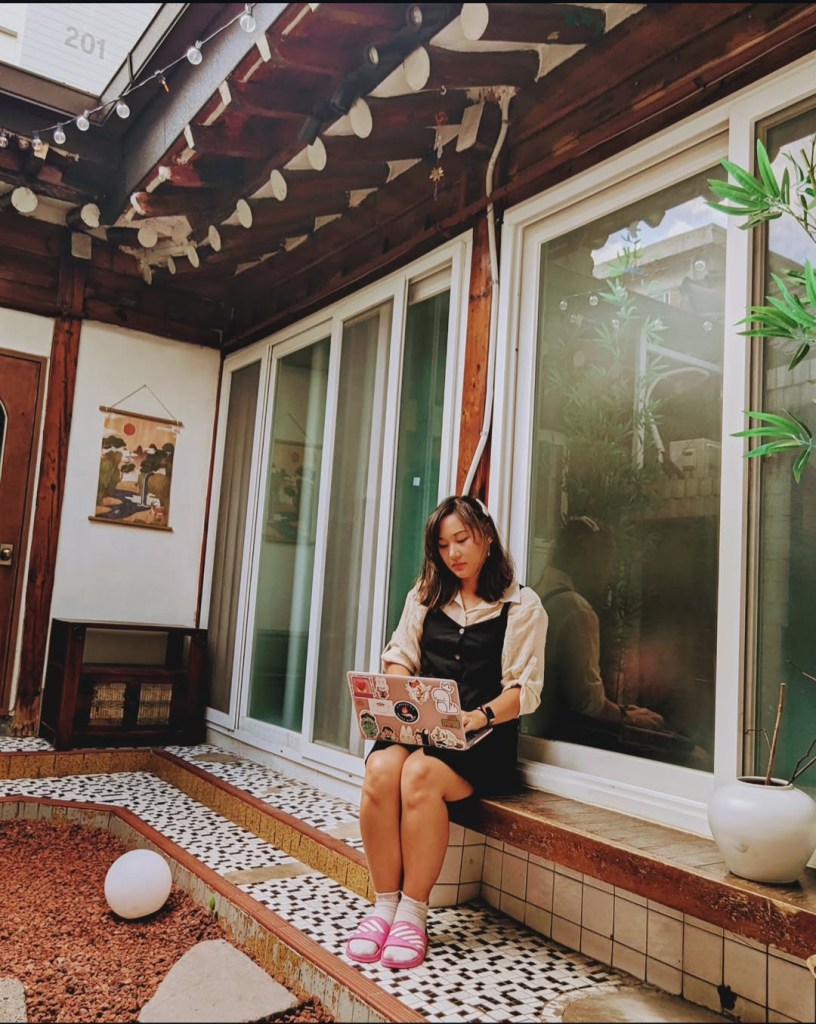
Fast-forward a decade and a half, and I had a very vivid dream that felt like it had to be turned into a fantasy novel. I don’t know what exactly came over me, as I was deeply invested in my career in clinical research at the time, but I ended up writing that entire book in three weeks. It wasn’t “good,” but it reignited my love of storytelling. Soon after, I started doing more research into myths I’d heard when I was younger and incorporating them into my writing, and that’s how my debut, Wicked Fox, was born!
What was teenage Kat like, and do you think she would’ve seen herself becoming a bestselling YA author one day?
Teenage Kat was a very excitable and dramatic girl who loved fangirling over things like anime and K-pop. I was practically raised on Toonami (iykyk). I had these giant box sets of Sailor Moon and Dragon Ball Z that I would get for Christmas. And I’d watch them over and over again. I was also really into reading romance, and Nora Roberts was, and is, one of my favorite authors. Chances were that at any time, you could look into my backpack and find at least one beat-up Nora Roberts paperback in there. I stole all of my mom’s books, and then I eventually surpassed her in reading and had to get my own. I also loved other genres. I went through a very intense dystopian phase in high school after reading Brave New World.


I think teenage Kat could never imagine becoming a bestselling author, even though she dreamed of being a writer all the time. Unfortunately, because I never knew of any successful Asian American writers in the YA space growing up, I just didn’t think it was a possibility. But I’m glad I was encouraged by others to pursue it.
Your books blend Korean mythology with everyday life in such a magical way. What is it about these traditional stories that speaks to you, and how do you decide which ones to explore through your characters?
I’ve always loved the exploration of ancient myths in a modern setting. How would an old god react to seeing modern technology? How would a mythical creature hide in such a densely populated city? Would they utilize modern conveniences or shun them? I think I was lucky, because I saw some of these scenarios play out in K-dramas before I started telling my own stories. I loved how they play with the original myths, and it allowed me the freedom to play with the interpretation of certain things that felt canon in the old stories.
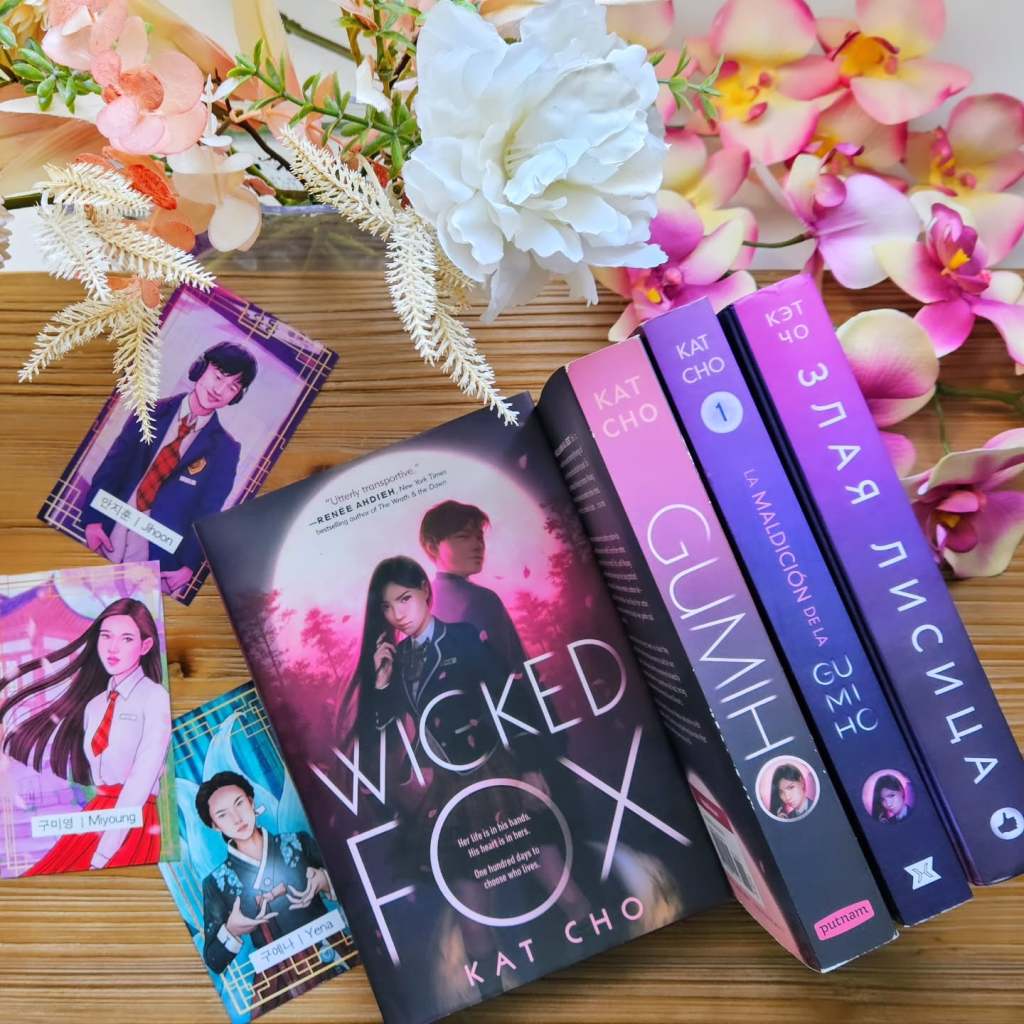
For Wicked Fox, I chose the legend of the gumiho because of how it’s framed in Korean legends. The nine-tailed fox exists across many Asian cultures, but, for some reason, Korean legends almost always paint her as an evil woman who preys on vulnerable men. I wanted to unpack that with a bit of a feminist lens. Because, of course, it is men who created these legends. So, perhaps they were biased when they told the stories. And perhaps, she wasn’t as evil as they painted her out to be. Once I had that thought, the story and characters kind of just flowed out of me.
So, for me, it’s not just reimagining an old legend for modern day, but also being aware of the culture around the legend when it was created versus the culture we live in today.
From Wicked Fox to Once Upon a K-prom, your characters feel so real, even when the world around them is filled with magic. How do you balance fantasy with emotional authenticity?
I learned early on that no matter what genre I’m writing, I always start with character first. I want to build characters that have some relatable anchor, whether they’re fighting demons or feelings. As a reader, I’ve always believed that if characters are underdeveloped or unrealistic, then the most interesting plot could fall flat. Alternatively, I’ve loved a lot of books where nothing happens in terms of external plot, but the characters are so dynamic and interesting that I devour them.

In terms of balancing fantasy and emotional authenticity, I think it’s about focusing on relationships. Even if the big problem is magical, I always wonder how that magic affects the main characters’ relationships with the people around them. Does it strengthen the bond or weaken it, and why? For Wicked Fox, Miyoung’s supernatural abilities put Ji-hoon in danger. She hungered for his energy and could lose control to her inner demon and kill him at any moment. So, what does that do for a fledgling friendship-turned-relationship? And then, I wondered what would happen if her greatest fear came true? How would she react to that?

For Vicious Spirits, Junu’s magic doesn’t necessarily hurt Somin, but his magic makes him hate himself. And that self-hatred affects his relationship with others. I loved exploring that because it was both frustrating to see him self-destruct and satisfying when people who loved him chose to stick around.
In “Once Upon a K-prom”, you blend K-pop culture with romance and high school drama. What inspired that unique mix, and how did you approach balancing the K-pop fandom with the character’s personal stories?
To be honest, it felt like a no-brainer. I grew up with both K-pop and Disney Channel Original Movies (DCOMs). And I always thought they’d mix so well. So, when I sat down to write Once Upon a K-prom, I knew that was the vibe I was going for. There’s a nostalgic innocence in both for me. But, that being said, I did want to be honest about the experience of K-pop idols.

Being in the public eye isn’t easy to begin with, but imagine also being a teenager and going through all of the issues that come with that. I will say figuring out the balance was tough at first. I did want to have that honest aspect of a young celebrity in it, but I also didn’t want it to be a sad story. I sold this book in late 2019 and wrote it entirely during the pandemic. I needed a sweet, hopeful story to escape into and wanted to provide that to my readers as well.
I pretty much approached it as a coming-of-age story first, but with the heightened drama of K-pop amping those feelings up at times. But, still always rooted in the core relationship between Elena and Robbie.
Even though Robbie is a celebrity, he still has regular teenager problems: grief over losing a parent, anxiety from not feeling good enough, a desperate desire to prove himself, and a need to find comfort in an old friend. I felt that Robbie’s problems were good parallels to Elena’s: she struggles to find her purpose, has a desire to be acknowledged and seen, and shares a fear of abandonment.

I will admit, a lot of these fears and flaws were easy to write about because I feel them myself to some degree. That’s kind of an easy trick for any beginning writer: write your own greatest dreams and fears into your books, and then the emotions will be honest because they’re your own emotions. Then, when you add on the public scrutiny from Robbie’s celebrity status, and, of course, there are more places for awkward interactions and amped-up crisis moments.
Wicked Fox and Vicious Spirits have such rich worlds and characters. What inspired you to explore the gumiho myth in your stories, and what did you want readers to take away from that exploration?
As I mentioned above that I wanted to reimagine a myth that painted women as evil in a new feminist lens. I never really wondered why it was written that way until I watched a K-drama where the gumiho was a man. It was still about a mythical creature fighting his inner demons, but it wasn’t about how handsome or adulterous he was. It was just about his internal struggle between good and evil. Why did the old legends paint a gumiho as a manipulative seductress? And, it was pretty obvious because it was written in a very patriarchal society, where women were expected to be innocent and demure. And if any woman dared to be bold or brash or “sexy”, then she was evil.

When I knew I wanted to retell the myth in a modern setting, where those patriarchal beliefs were no longer the norm, I knew it would be a good opportunity to unpack that bias. And, I also didn’t want her to be completely innocent. She was still a killer, still hunted human men to live forever. It wasn’t about forgiving her for her sins, but to explain that her actions weren’t so black and white. There is no clear good or evil in these stories. There are just those who are trying to survive and the lengths they’ll go to do it.

In terms of what I want readers to take away from these retellings, I hope that people see how complex and layered our culture is. There are so many different experiences even within a single community. The way Miyoung experiences the world is so different from Jihoon’s; they come with their baggage that shapes how they walk through this world. And even though they’re connected by a place and a culture, they are unique people. I want to fight the idea of seeing Asians or BIPOC as a monolith. And I do that one character at a time.

Your recent book, “Wish Upon a K-star,” has resonated with many fans of K-pop and YA romance. What inspired this story, and how did you approach capturing the highs and lows of idol life while staying true to your signature emotional storytelling?
This story had two celebrities as the main leads, as opposed to the normal girl/celebrity boy pairing in Once Upon a K-prom. So, it was a challenge to make sure these heightened personalities were relatable, but it was also an opportunity to really up the drama and show the differences between how boys and girls experience being idols and celebrities. When I realized that would be one of the topics I touched on, it was easy to figure out who the leads should be.

Moon Min-seok was the easiest one to decide because he was a fan favourite from Once Upon a K-prom, so I knew that if I was going to do a spin-off novel, it had to be his story. And, he’s a guy who (seemingly) finds it easy to be a celebrity. He’s charismatic and talented and well-liked by almost everyone he meets. So, he kind of just coasts through idol life. BUT, I knew that it’s not easy 100% of the time, not even for the most talented person.
So, I did want there to be a struggle in his past that he hides with his charisma. That was also easy, because the history of his group, WDB, was also alluded to in Once Upon a K-prom. They struggled as debuts before breaking out in their second year.
Deciding on Shin Hyeri, the female lead, was more of a creative challenge. I wanted her to be the one person in the industry who doesn’t like Minseok. That would immediately present itself as a challenge to him. But, since I knew Hyeri would be the main narrator, I wanted her to be the emotional anchor for the story. Min-seok was allowed to be a shining, bright, seemingly untouchable celebrity as long as Hyeri rooted us in her emotions. And, it became very clear that her story would be about how rumours and bias affected her rise to stardom.
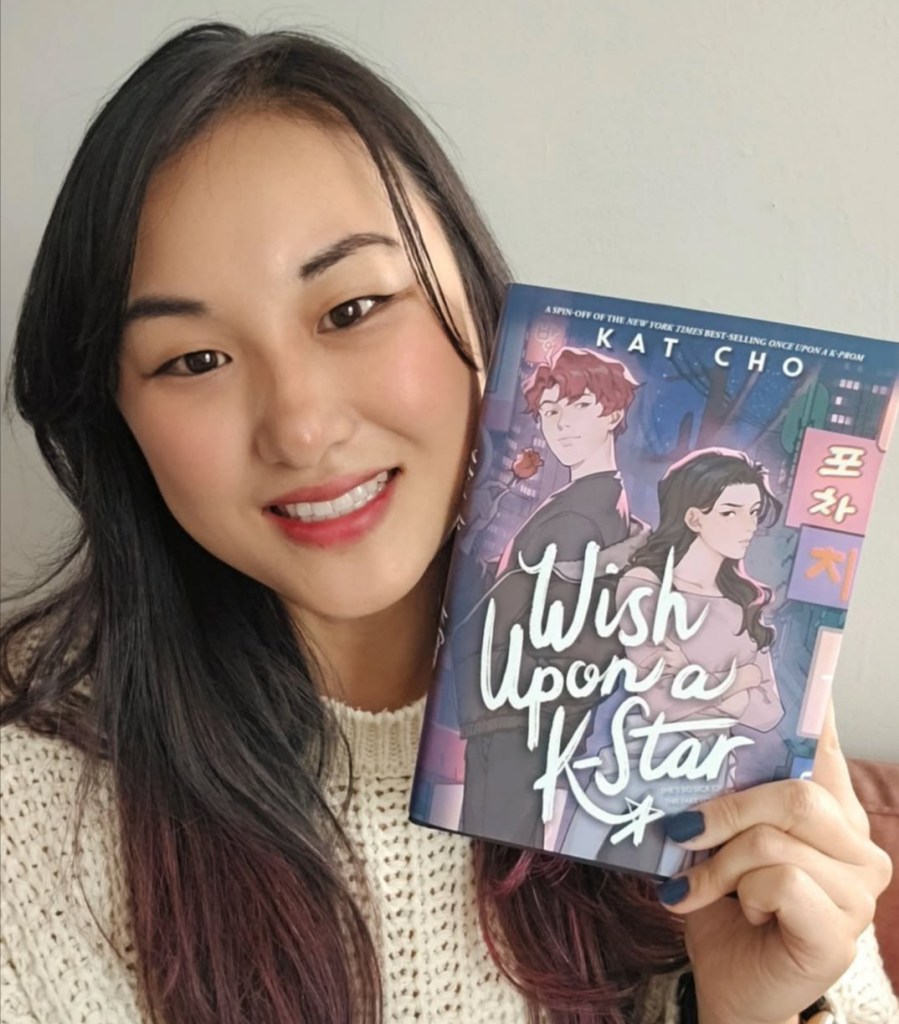
With the rise of social media, it’s becoming easier for rumours to spread about anyone. And I thought this problem was something that deserved to be explored. Whether someone is a celebrity or not, there are so many chances for things to snowball on social media, so I thought it would be a relatable problem to deal with. But, regardless of the vehicle of the rumour, being misunderstood by others and hated based on one singular belief or incident is something that has probably existed since the beginning of time (Just ask Hester Prynne or Cassandra).
You’ve shared your love for K-dramas and anime. Has any show, character, or moment ever sparked a scene or shaped a character in your writing?
Yes, definitely. I think the “spiciest” scene I’ve published at this point is probably in Vicious Spirits, where the two leads kiss on a piano. A scene was directly influenced by that in Strong Woman Do Bong-soon (a K-drama with a slightly ridiculous plot but some of the best chemistry I’ve ever seen between two leads).

Jihoon in Wicked Fox is very inspired by teenage boy characters in some of my favourite teen K-Dramas. One inspiration was Lee Jong-suk’s character in School 2013, a boy who was lazy and affable. And Somin in Vicious Spirits first appeared in Wicked Fox as the spunky best friend, who’s also a K-Drama trope character that I love.
You explore identity and culture so beautifully in your stories. How has writing helped you connect more deeply with your Korean American roots?
Thank you! That’s so wonderful to hear, because honestly, one of my main priorities is to show the beautiful aspects of my culture while also being honest about my experience. Writing has helped me explore my Korean and Korean American roots more deeply. I didn’t grow up knowing too much about the history of Korea outside of what we’re taught in schools and what my own family told me. I knew that my grandparents had survived the Korean War and the early decades of the de facto dictatorships, cosplaying as democracy. I knew about my parents’ childhoods in Korea and what it was like coming to the US.
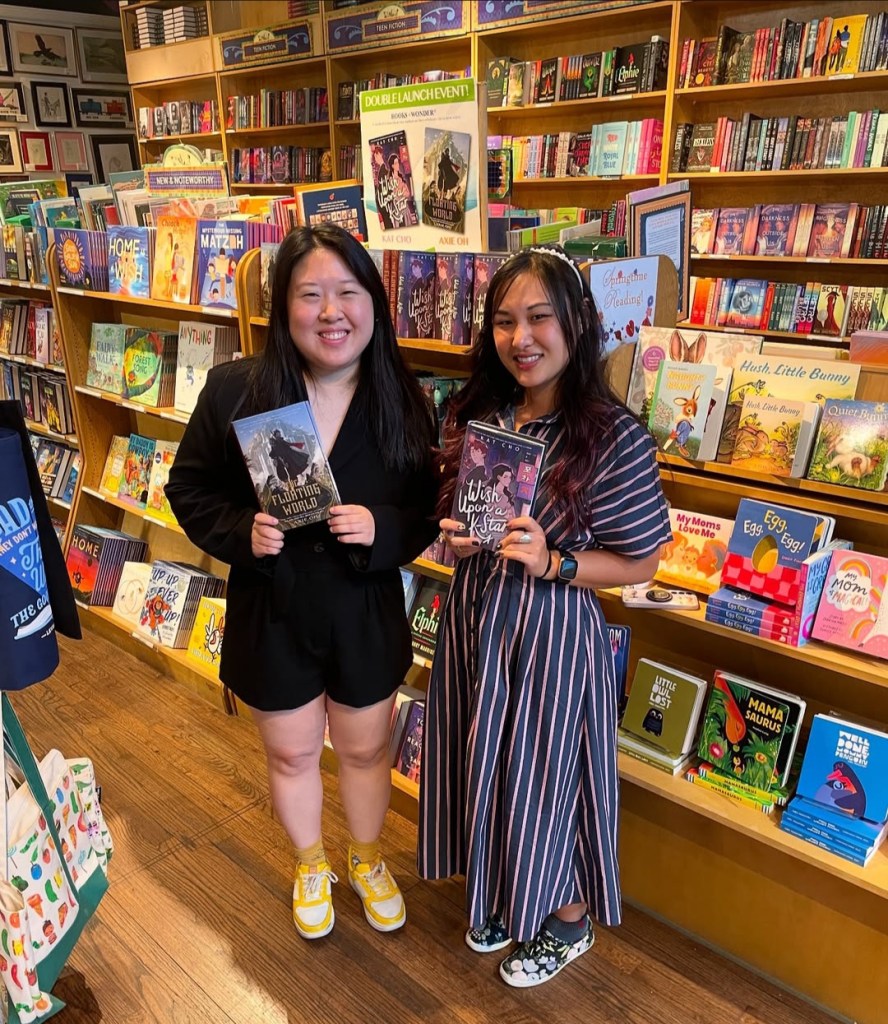
And, I experienced Korea myself as a kid since we visited my paternal grandparents there during many brutally humid summers. But, still, I didn’t know a lot of the details and facts about our history. So, I started doing a lot of research to make sure that I was presenting everything in the proper context. I understood a lot of the Korean mindset, but I wanted to know why we thought that way. What in our past caused us to believe such things? It was a fascinating exploration and brought me much closer to my roots, and, in a way, it helped me understand my grandparents more. Especially my paternal grandmother.

She would sometimes off-hand mention something awful she experienced during the Japanese occupation of Korea or the Korean War. And, like most kids, I’d only half-listen or think she must be exaggerating.
The Korea I knew was safe and modern and democratic. But learning about the reality of things when she was a kid made me understand that she was sharing a really personal part of her past with me.
And, I am so grateful that I came to this realization before she passed away and got a chance to have some really good conversations with her about her life and experiences. I’ll always carry those with me now.

Presenting my culture feels like a big responsibility (when I was first published, there were only a handful of traditionally published Korean diaspora authors), and I want to take that responsibility seriously.
There have been times when I haven’t felt “Korean enough” or to write authentic stories. But a good writer friend who is also BIPOC once told me that it’s always authentic because I am Korean. So, it’ll always be an authentically Korean story.
That helped me lean into embedding more of my personal experiences into my writing. And I’m working on a story that is very much about being a Korean diaspora kid growing up in the United States. I’m glad that I get to explore this part of my identity in a story, and I hope some of my readers might see a bit of themselves in this character.
Every creative path has its ups and downs. What were some hurdles you’ve faced along the way, and how did you overcome them?
I think the big hurdles in traditional publishing are well-discussed online (e.g., getting an agent, getting a publisher, getting publisher support). But, for me, the biggest and most prevalent hurdle is self-doubt. I know so many authors at all stages who battle self-doubt and self-rejection at every step. Sometimes it’s because of external factors making us feel like we’re not good enough or doing enough. But, for me, a huge root is that I come from a family/culture where we measure a lot of self-worth in academic achievements and pursuits.
Things that have a metric system that tells you if you’re doing well, like getting an A or an award or a degree. But, in writing and publishing, other than getting your book published (which is a huge accomplishment that I remind myself of every time I release a book), the other accolades are very hard to receive. If only 1% of aspiring authors get published, then of those, only 0.1% hit a bestseller list or become award-winning.
But I overcome these doubts by reminding myself that in any other profession, success isn’t measured by awards or bestseller lists. Success is in doing the job every day. So, as long as I’m continuing to tell stories that provide entertainment to some readers, then I’m a success. And I remind myself that if there’s just one reader who sees a piece of them in my stories and characters, then that’s an even bigger success.
Being a New York Times bestselling and internationally recognized author is a huge accomplishment. How do you feel about the impact your books have had on readers globally?
It’s still so surreal to hear those labels applied to me. I want to say thank you so much to all the readers all over the world who have picked up any of my books. I feel so lucky that my books have extended beyond my small community.

And I feel proud that so many people, regardless of their background, have enjoyed my stories. That’s something I always hoped for, to prove that a book by and about Korean main characters could be seen as universal.
What’s something you think young writers should know about being an author or the publishing industry?
On the practical side, I’ll say perseverance is the key. Don’t give up. There is rejection in any creative pursuit, but don’t let that get you down. The one thing all your favourite authors have in common is that they never gave up.
In terms of personal advice, I think the most valuable thing I ever did for my writing and my career in publishing was to build a community. Writing and publishing can so often feel like a lonely endeavour. But it doesn’t have to be. If you have other creatives to share your joys and fears with, then you’ll always be better for it. Also, writers and publishing people are some of the kindest, funniest, smartest people I’ve ever met. It’s just a joy to have creatives like that in your everyday life!
Are there any upcoming stories you’re excited to share with your readers? What can we expect next from you?
YES! I have two unannounced upcoming books. I can’t say a lot about either until the books are officially announced, but I can say I’m returning to my fantasy roots. And that each book is based on a different Korean myth or legend. They’re also both fairly different in tone, so I’m excited to see how readers receive each!
What would you like to say to our readers who have found a connection with your stories and characters?
Thank you so so so much for picking up one of my books! I am so honored that you chose to spend your time with my characters and stories. I hope that they brought you a bit of joy and escapism. And please stay tuned because I have many more stories to share!
Once again, we would like to express our heartfelt gratitude for your precious time and sharing insights about your journey. Thank you so much. On behalf of the entire team at Hallyuism, we wish you all the best for your future and lots of love from India!
Do let us know in the comment section which of Kat Cho’s books you would like to read, and if you have already read a few, which one was your favourite?


This is called beauty with brain 🔥
Wicked Fox has been on my TBR forever !!
Love how her stories mix K-pop and mythology ✨
As a fellow writer, reading about Kat Cho’s journey was so motivating! Loved her insights.
Kat Cho’s journey is so inspiring! 💜 I love how she blends Korean culture, mythology, and K-pop with relatable emotions—it makes her stories feel magical and real at the same time. Her dedication to representing her roots and connecting with readers worldwide is truly amazing.
The interview is really long but so detailed too. She defined every aspect of her life through her stories that so mesmerizing. The books she wrote I really want someday they turned into a best movie or drama so who didn’t read can also experience her writing. I really want to read ger recent book wish to become a k star if I get a Time. The story she mentioned about her paternal grandmother is so heart touching.
Such an inspiring interview! Kat Cho’s journey shows how powerful storytelling becomes when culture, emotion, and imagination blend together. I love how she redefines myths, explores identity, and brings both K-drama charm and real human feelings into her books.
Kat Cho’s work is so inspiring! Wicked Fox is brilliant with its strong feminist lens, showing empowered female characters and giving the Gumiho a whole new depth beyond just being ‘evil’. I also loved reading about her other books , which all carry that same feminist energy and creativity. She really knows how to tell stories that feel meaningful and powerful. The article is so well written!
“Reading this interview makes me even more in awe of Kat Cho 💖 Her way of blending Korean mythology with real emotions is magical. I can’t wait to dive into Wicked Fox… it sounds like a story that will stay with me forever!”
I absolutely loved reading about Kat Cho’s journey! The way she reimagined the Gumiho myth in Wicked Fox to challenge patriarchal views is so powerful.
I also relate so much to her background of growing up on Sailor Moon and K-pop! It’s inspiring to see an author embrace those ‘fangirl’ roots and turn them into such successful, heartfelt stories. Definitely adding Wish Upon a K-Star to my TBR list!
Her stories are deeply mesmerizing, especially the touching memory of her grandmother. Kat Cho’s writing beautifully blends culture, emotion, and imagination, and I’d love to see her books adapted into films or dramas.
“A brilliant interview with a brilliant author! Kat Cho has a magical way of making Korean culture feel universal while keeping it deeply personal. I especially loved her advice to ‘write your own greatest dreams and fears’—it makes for such honest storytelling. Can’t wait to see what she writes next for the Korean diaspora experience. Excellent work to the whole Hallyuism team for this feature!”
Kat cho’s stories have magical vibe to it. Her advice of building community is so thoughtful it’s always better to share joy & creativity with people. Her coming from a culture where self worth is tied to achievements & academics & pursuing such creative work and making her unique path is so meaningful 🫶 Her journey is so inspiring