Writer: Bhavika Sachan (Delhi, India)
Editor: Prachi Vaid (Delhi, India)
Korean mythology comprises folk tales and legends from various regions of North and South Korea that have become an integral part of Korean culture. It is a combination of local traditions and influences from religions such as Korean Shamanism, Buddhism, Taoism, and Confucianism. The earliest written records of these myths date back to the twelfth century, although they existed in an oral form even before this. Numerous mythological stories and creation myths make up the peninsula. The following are some interesting ones:
도깨비 DOKKAEBI (KOREAN GOBLIN)

Goblins are created from objects that have been discarded when they are stained with human blood and bear no similarity to human appearance. Korean Dokkaebi is supposed to have only one leg on the right side. Goblins are super mischievous and riddle passing travellers, even challenging them to a wrestling match. They all appear different from one another, but the general belief is that they all appear fearsome. They are also believed to carry magical objects on their persons. Actor Gong Yoo played the role of the goblin in one of his dramas, “Guardian: The Lonely and Great God”, making this mythological creature really popular around the world.
구미호 GUMIHO (NINE-TAILED FOX)

Commonly used as a character trope in many Korean dramas, the Nine-tailed fox is a well-known creature. Its portrayal, in entertainment series, is usually of a beautiful girl or a man cursed to become this creature, and can only become free with true love. The plots are usually tragic or melodramatic, often involving long separation periods between lovers and ultimately leading to their emancipation. The real legend is even sadder and gruesome. The creature, which looks like a fox, retains the ability to transform into a beautiful girl to lure men close enough to eat their livers. It is believed that if the Gumiho can refrain from eating human flesh for a thousand days, it can become human.
저승사자 JEOSUNG SAJA (KOREAN GRIM REAPER)

Korean Grim Reapers are meant to guide the dead into the afterlife. Traditionally, they wore a black hanbok, coupled with a black hat, and were often seen on a wooden boat. They were meant to help the dead cross the river (or the sea) – a spiritual symbol of life without regrets, leaving behind material and worldly worries. Nowadays, they are often shown wearing a long black coat with a fedora, especially after the portrayal of Lee Dong-wook in the K-drama, “Guardian: The Lonely and Great God.” These figures are feared among Koreans as they are representatives of death and considered an ill omen.
불개 BULGAE (FIRE DOGS)

Bulgae belonged to the kingdom of darkness in Korean mythology. It is believed that they are responsible for the moon’s eclipses. In the legend, the Fire Dogs’ king was concerned about the kingdom’s darkness; therefore, he sent these fire dogs to capture the moon and the sun. Unfortunately, the moon and the sun proved to be too cold and too hot for them to handle. And the dogs would burn or freeze when they tried to capture them. The king, however, refused to give up. As such, a lunar or solar eclipse occurs each time a dog tries to retrieve the moon or the sun for its master and fails.
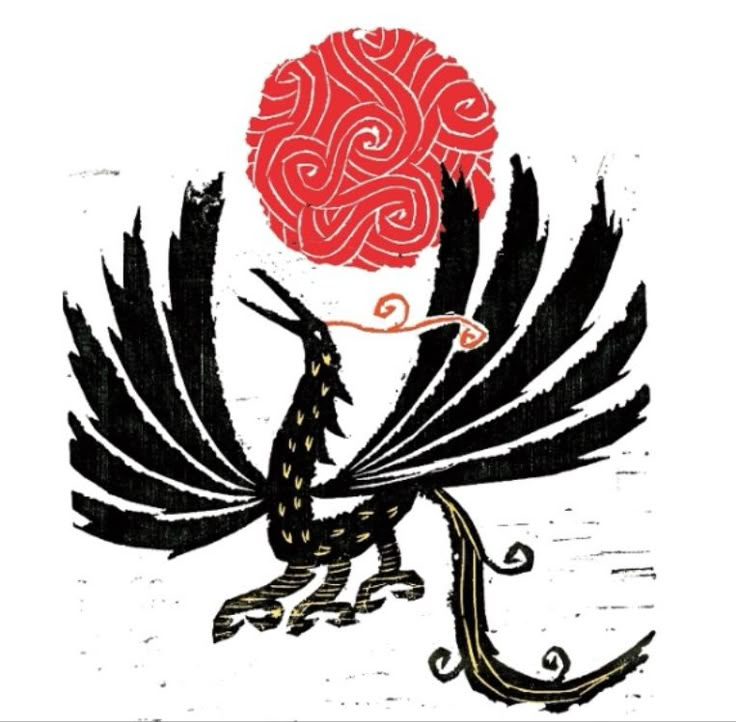
삼족오 SAMJOKO (THREE-LEGGED CROW)
This creature was the primary symbol of the Goguryeo Dynasty. The three-legged crow is believed to be a resident of the Sun. Thus, they were seen to be sun gods and actually had mightier powers than dragons and dragon gods. The creature was used as a symbol to throw light on the power of the Taewang (literally “Emperor” or “Greatest of Kings”) and Goguryeo’s sovereignty.
In addition to these mythological creatures, Korean mythology also entails numerous gods as well as notable human beings. Many of these creatures feature in more than one Korean folklore, and the story varies as it gets orally transferred from one milieu to another.
If any of these myths got you really interested, please let us know in the comments below, and we’ll get back to you with more intriguing history behind these tales!


Heard of it but not in detail tho👏
Thanks to this article, I got to know about so many unique legends and creatures in Korean mythology. For me Bulgae was the most interesting one! As a mythology lover, I loved this article! Please keep bringing more.
Loved how simply this broke down some of the most fascinating creatures in Korean folklore. Dokkaebi and Gumiho always get the spotlight, but learning about Bulgae and Samjoko was actually the most interesting part for me. Would definitely love more mythology posts like this.
This was such a cool read — I didn’t know about the Fire Dogs (Bulgae) before, and the idea that they cause eclipses is wild. The dokkaebi being one-legged and super mischievous also really stood out. And the three-legged crow (Samjoko) as a sun symbol was something I’ve never heard of! These creatures feel so rich and symbolic.
This article was so fascinating! Korean folklore has such rich storytelling, and learning about these supernatural beings really highlights how deeply culture and beliefs have shaped traditions over time. Each creature’s story carried symbolism, fear, or moral lessons, which makes the folklore even more intriguing. Articles like this keep cultural history alive in such an engaging way!
Such a well-written piece! Korean mythology has so many layers, and you explained it so clearly. I’d love to learn more about the lesser-known creatures too.
Dokkaebi, Gumiho, Jeosung Saja… all so intriguing!
These Korean myths are honestly so fascinating 😭✨ I love how each creature has such a deep meaning and story behind it. Would love a part 2!
I never knew Dokkaebi and Gumiho had such dark origins… Korean mythology is wild and so interesting! Please drop more myths 🙌🔥
I am always fascinated by mythological character whether it’s Indian,chinese,korean. Obsessing over gumiho,from repears, nine tailed fox looked good on novels ,dramas until you know about the dark mystery behind them. Korean mythology is top notch for real.
Reading this article is such a wonderful experience as Koreans also have such kind of mythology like we believe just with different name grim reaper help death in their afterlife and praise and punish according to their karma like it happens in Indian mythology. The creature 👻👽 we experienced in k drama are so different in real life but I really love reading this article knowing about different creatures that korean mythology believes.
This is a great, concise breakdown of some of the most famous creatures in Korean folklore. It’s so interesting to see how beings like the Gumiho and Dokkaebi are constantly reinterpreted in modern dramas and films, keeping the myths alive.
I am always been attracted to supernatural related themes whether it’s through dramas , fiction or history. This article is so interesting. The mythical legends of Gumiho , grim reaper, goblin, etc have evolved through time. It makes me wonder how these legends came in the first place.
The stories of Dokkaebi, Gumiho, and Jeosung Saja are so fascinating and show how rich and imaginative Korea’s folklore is. I especially find the tragic and mystical side of the Gumiho legend captivating, it’s amazing how these myths still influence modern K-dramas and pop culture. The Samjoko and Bulgae myths also give such a unique glimpse into Korea’s ancient beliefs. Makes me want to explore these legends even deeper!
Korean mythology is honestly so fascinating! I love how each creature—Dokkaebi, Gumiho, Grim Reapers, Bulgae, and Samjoko—has such a unique story and meaning. It’s amazing how these legends still influence K-dramas and modern culture today. Learning about them makes Korean folklore feel even richer and more magical.
Learning that Goblins (Dokkaebi) are actually mischievous tricksters and not just Gong Yoo in a coat is a game changer! And Haetae being a symbol of justice? That’s so cool.
Also, the Grim Reaper (Jeosung Saja) lore hits different after watching Goblin—it’s amazing how deep these stories go beyond just K-Drama tropes!
Thanks to this article, I discovered so many fascinating and unique legends from Korean mythology, and it was such an enjoyable read. Bulgae stood out as the most interesting to me, with its story really capturing my imagination. As someone who loves mythology, I truly appreciated this article and please keep bringing more like this!
“What a fantastic and spooky dive into the world of Korean mythology! It’s incredible to see how these legends have transitioned from the ancient folklore Bhavika described into the iconic characters we love on screen today.
I was especially struck by the description of the Bulgae. While we all know about the Gumiho and Dokkaebi from dramas like Guardian and Tale of the Nine Tailed, the story of the ‘Fire Dogs’ trying to capture the sun and moon is such a unique explanation for eclipses. It’s a beautiful yet tragic image.
The distinction between the traditional Jeosung Saja in a black hanbok and boat versus the modern fedora-wearing version is a great touch. It really shows how much pop culture has reshaped our visual understanding of death in Korean culture.
Huge thanks to Bhavika Sachan for the rich storytelling and Prachi Vaid for the great editing. Also, a big shoutout to the team for finding such atmospheric visuals from MythLok and Pearl River Mart—the ‘Fire Dog’ art really captures that kingdom of darkness vibe!
Which of these legends do you think has the most potential for a new K-drama adaptation? I’d love to see a series focused entirely on the King of the Fire Dogs!”
Korean folklore is indeed very fascinating. It has a perfect balance of vivid storytelling and spooky yet unique creatures. For a k-drama, I think samjoko can be a great character. I’m glad you enjoyed the read!
Korean mythology is absolutely fascinating! I had no idea creatures like the Bulgae and Samjoko had such unique stories. Can’t wait to learn more about these legends and their origins!
Getting to know about a different side of k drama “Tale of nine tailed fox” after reading about these folk stories. The symbolism of every story and creature made it more intriguing. Never knew korean mythology was so multi layered full of fascinating stories 🔥