Writers: Anika Chopra (Delhi, India) & Prachi Vaid (Delhi, India)
Editor: Prachi Vaid (Delhi, India)
South Korea is home to numerous traditional cultures and customs. One of them is Nakhwa Nori. Nakhwa Nori is a representative folk game of Haman-gun, held in spring around April-May, where charcoal powder produced by the village itself is rolled up into Hanji, or Korean Paper, to make Nakhwa, which is lit by hanging it on a rope, creating a spectacular view of the wind. Every year on the Buddha’s birthday at Goehang Village in Haman, Gyeongsangnam-do Province, sticks made of charcoal powder are used in a ritual.

HISTORICAL ORIGINS & COMMUNAL SIGNIFICANCE
Beyond its visual appeal, Haman Nakhwa Nori, also known as Nakhwayu orJulbul Nori, holds deep cultural and communal significance. It is believed to have started in the middle of the Joseon Period in the 17th century to enhance the level of fun and excitement during boat rides, poetry recitation, or at a lantern festival. As a representative folk game, the term nori does not mean competition but refers to a form of collective play, celebration, and enjoyment that is rooted in everyday life. The event is entirely community-driven, with villagers taking part in the preparation, lighting, and observation of the view. Through this shared participation, Nakhwa Nori strengthens social bonds and allows traditional knowledge and practices to be passed down across generations, preserving the cultural identity of Haman-gun.

CRAFTING NAKHWA
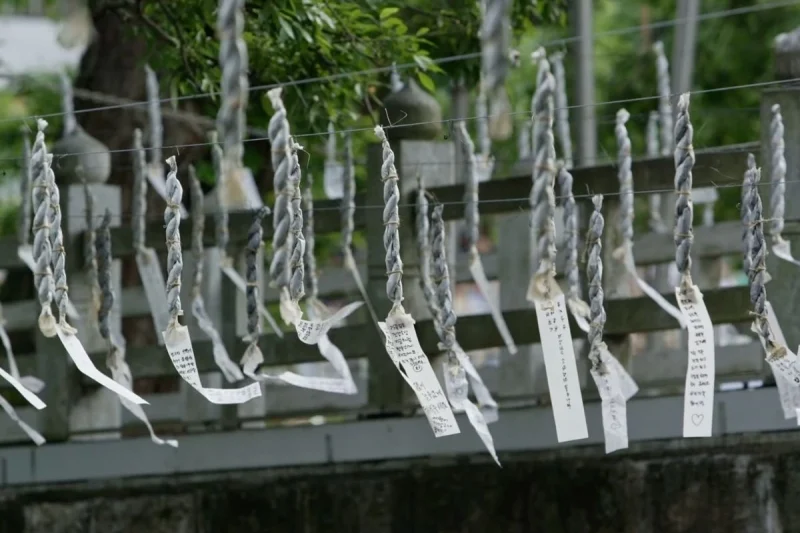
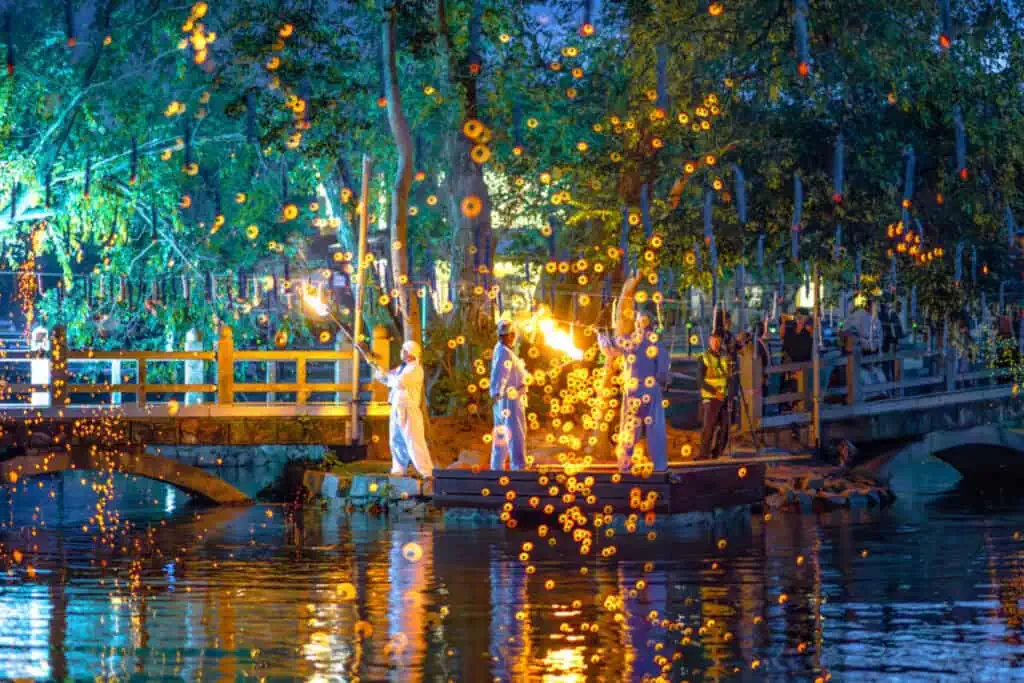
The preparation of Nakhwa Nori begins with burning oak wood to produce charcoal, which is then finely powdered by the participants themselves and wrapped in hanji paper to form long wicks. Once prepared, these charcoal- filled paper wicks are placed between lotus lanterns and hung in rows from tree branches, riverside cliffs, or the jutting corners of rooftops, often above water. The spectacle begins when the wicks are lit, burning the charcoal powder slowly, and concludes with scattered tiny glowing flames, creating the effect of falling sparks and resembling the visual of falling flowers, thus giving rise to its name, Haman Nakhwa Nori, or falling flames.
CEREMONY OF BLESSINGS
When the preparations for the ritual are complete, the main event begins, with a ritual called Goyuje, where residents of the village read celebratory remarks for the ignition of fireworks and pray for happiness and good fortune to last for generations. After Goyuje, the influential people of the local community gather around Yeongsongnu to ignite the nakhwa wicks. A green bamboo stick, approximately one meter long and five centimeters in diameter, is then wrapped at one end with a cotton cloth soaked in oil and used as a torch to light the charcoal-filled paper wicks. Once the wicks along the edges are ignited, the residents float a raft to light the nakhwa wicks hung in the middle of the pond. It takes over an hour to ignite a thousand wicks, before everyone can enjoy two hours’ worth of watching the falling flames.
CULTURAL LEGACY AND PRESERVATION
The falling sparks of Nakhwa Nori are often understood as symbolic expressions of blessings, wishes, and prayers, resonating closely with Buddhist ideas of impermanence, renewal, and harmony. Here, fire acts as a purifying element, while the gentle fall of glowing sparks symbolizes the falling flowers, suggesting beauty in transience. Today, Haman Nakhwa Nori continues to be carefully preserved as an important traditional cultural practice and was designated as the first Intangible Cultural Property in Korea (Gyeongnam-do Intangible Cultural Property No. 33) in 2008. While it attracts visitors from beyond the region, the festival maintains its original ritual form and communal spirit, reflecting the enduring legacy of a Joseon-era tradition in contemporary Korean society.
South Korea is full of vibrant festivities. Let us know in the comments your favorite Korean festival!


I had never heard about Nakhwa Nori before reading this, and it sounds absolutely beautiful. The way the festival combines community, ritual, and symbolism with such a simple element like fire is fascinating. I really liked the explanation of its history and meaning — it made the festival feel more than just visually stunning. Would love to see this in person someday ✨
The light festival is something I wanna see in person 😍
Such a beautiful and calming read ✨ I loved learning about Nakhwa Nori and how it turns fire into something so poetic, like falling flower petals. The way this festival brings together history, community, and art is truly fascinating. Articles like this make me appreciate Korean culture on a much deeper level—would love to witness this magical festival in person someday
Having learned Korean to some extent, I like decoding the words I come across for the first first time like the festival above- 함안 낙화 놀이 literally translating to “a place- Haman County(in South Gyeongsang Province)”, “falling flowers/flames (as mentioned in the article)”, and “play/game/festival” respectively. Hence, “the Festival of Falling flowers/flames in Haman.”
What I really liked is that this festival emphasizes quiet beauty, grace, and cultural heritage not loud, explosive fireworks. And because it is celebrated along riversides, creating a dreamlike atmosphere. That in itself feels exciting to witness in person. Manifesting to be a part of this festival one spring or fall!🌸🔥
Never heard about Nakhwa nori festival but after knowing the urge to experience it in person is taking over. The fact that folk game doesn’t make people compete but a form of collective play & celebration is so warming. The sight of villages during this festival must be so fascinating after igniting the Nakhwa wicks. Very warming way of preserving culture
This article beautifully explains how Nakhwa Nori is more than just a visual spectacle, it’s a living tradition rooted in community, ritual, and shared craftsmanship. The symbolism of falling sparks reflecting impermanence and renewal adds a deeper Buddhist meaning that makes the festival even more powerful. It’s inspiring to see how such Joseon-era customs are still preserved with authenticity in modern Korea.
The fact about Nakhwa Nori that folk games have collective plays & not competition is so fascinating. How amazing they preserved such old customs during these modern times
I have seen this light festival on kdramas and it really looks ethereal!! Jealous of the people who gets to experience this in real life 💜💜💜💜
I am honestly surprised that I hadn’t heard of Nakhwa Nori before reading this article! Anika and Prachi have done a fantastic job of describing such a poetic and visually stunning tradition. I was particularly fascinated by the communal aspect—the fact that ‘nori’ represents collective play and celebration rather than competition is such a beautiful reflection of Korean social values. The process of hand-crafting the charcoal wicks in Hanji paper shows a level of dedication to preservation that is truly inspiring. Learning that this Joseon-era tradition is the first Intangible Cultural Property of its kind makes me appreciate the ‘falling flower’ symbolism even more. This is definitely going on my travel bucket list for a future spring trip to Haman-gun! Exceptional work by the writers and the editor, Prachi.”
It’s on my travel bucket list as well! Thank you for reading>
This is my first time discovering Nakhwa Nori through your article; it sounds really exciting and beautiful. Low key it gives me the vibes of the Tanbata festival a bit, which is not a Korean festival. The festival of Nakhwa Nori seems such a graceful way of showing their devotion to Buddhist ideology and celebrating the culture! I hope so. I’m able to attend this festival live someday.