Interviewer: Deena Jasmine (Chikkmagaluru, Karnataka, India)
Editor: Pooja Vishwanathan (Jhansi, Uttar Pradesh, India)
Music has a way of saying the things words often cannot, and in this conversation, we explore the artistry, inspiration, and moments that shape a singer’s journey.
Meet Himang, a Korean-Indian artist who grew up in China, and whose music feels like a reflection of everything he’s lived through. Born in Beijing and shaped by different cultures, he hasn’t followed a single path, and that’s exactly what makes his sound so honest and relatable.
Blending pop and R&B while moving between languages and experiences, Himang creates music that speaks to identity, belonging, and the in-between moments of growing up. With his debut EP BIGKID, he leans into those emotions, sharing a coming-of-age story that feels both deeply personal and easy to connect with.
We sat with Himang to talk about his journey, the story behind BIGKID, and what’s next for him.
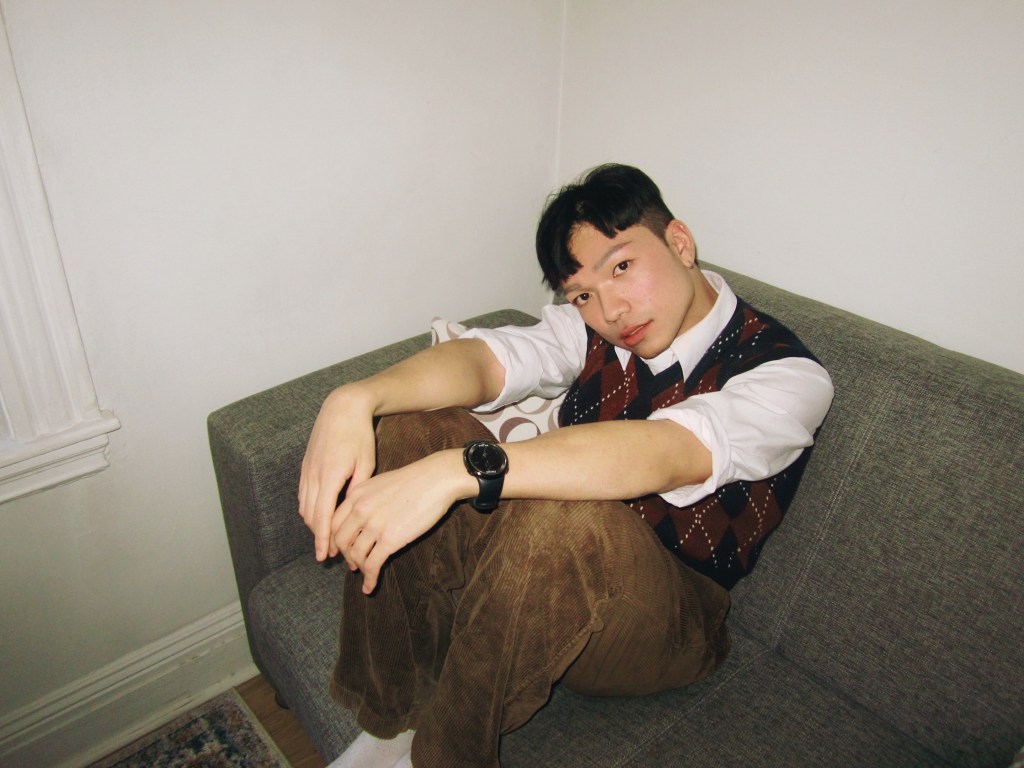
Could you introduce yourself to our readers? How did your journey as an artist begin?
My name is Himang. I am a half-Korean, half-Indian singer-songwriter born and raised in China and now based in the States. I make music about life, young adulthood, and my experiences as a third culture kid growing up in the East and moving to the West. My journey as a musician started when I was a toddler. I learned the three languages I speak: English, Korean, and Mandarin, through singing. My dad is a passionate music lover and self-taught percussionist, and he played all kinds of rhythmic music for me at home, from Garhwali folk songs to Gloria Estefan and Bob Marley. The musical seed that my parents planted in me later led me to Berklee College of Music, where I was able to fully spread my wings and pursue my dreams.
As a Korean-Indian artist growing up in China, how has growing up between cultures shaped you and your music?
I grew up surrounded by music. I sang in church and school musicals, played in school bands and orchestras, and also explored local performance venues for inspiration. I was exposed to so many different cultures growing up in a multicultural family and attending an international school. I, of course, grew up on iconic K-pop acts like 2NE1, Girls’ Generation, and EXO, but I also loved watching Bollywood films like 3 Idiots, Housefull, and Bride and Prejudice with my dad. I was always inspired by how stories are told through so much movement and visual intention. I always strive to be just as multifaceted and engage an audience through multiple art forms. I want to sing, dance, and tell stories that resonate with people, and I want to represent kids who look like me while doing it.
Your EP BIGKID is now out. How do you feel about finally putting this project out into the world?
I’m so happy and proud of this body of work because it captures a compilation of my own experiences growing up as a third-culture kid. Some of these songs were written when I was still a teenager, and it feels very rewarding for me to be able to share the inner workings of 18-year-old Himang. I’m proud of what he went through and everything he accomplished to get to where he is now. The EP is both a reflection of the sounds that I grew up on and a representation of my personality — introspective, soft-spoken, and wanting to be heard.
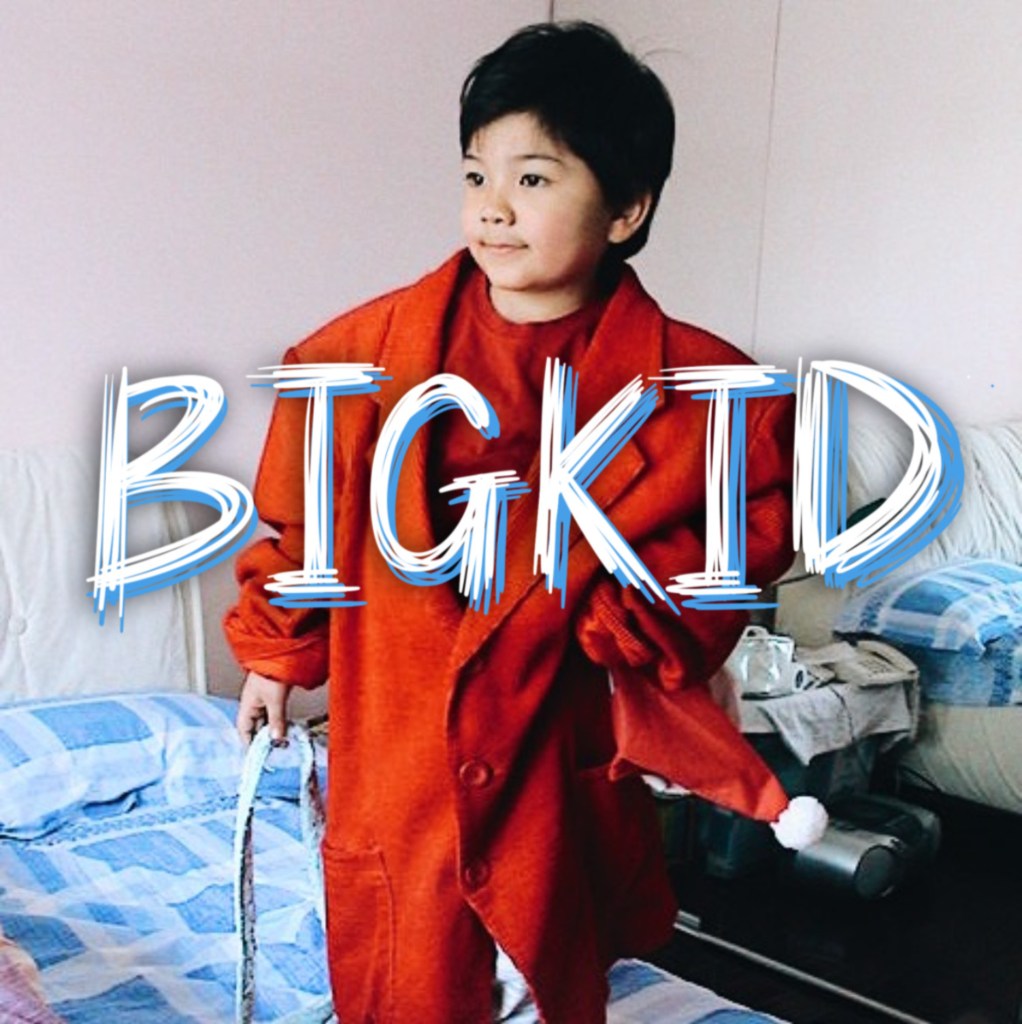
BIGKID talks about identity, growth, and belonging. What does this project say to you, and what message were you trying to convey?
I wrote about things that we don’t necessarily bring up in everyday conversation, or experiences that are unique to third culture kids that can feel too nuanced to accurately articulate into words — topics like imposter syndrome, FOMO, and learning how to navigate a new environment. Each of these experiences is personal and unique to my situation at the time. “Autopilot” was written about my time adjusting to college life in the States, touching on subjects like homesickness, hustle culture, and not finding time to process my own emotions. “Shooting Stars” was written when I was serving my military service in Korea during the pandemic, and I felt so uncertain about what the future held. I want my audience to find resonance in each song that applies to their own situations and find comfort in knowing that whatever they’re going through, they’re not alone.
What was the creative process like while working on BIGKID? Was there any moment or idea that you think changed the project?
The songs on BIGKID were written across the span of six years, and each one would almost always start as a voice memo on my phone. I would vocally jot down a song seed on my phone, whether it be a melody, a lyric, or both. Later, I would revisit the idea and expand on it. Everything changed after I returned to Berklee following my three-year gap from school. I met new friends and collaborators who really elevated my work from just an idea into a beautiful story that I now get to share with the world. They challenged me to explore new sounds and styles while still fully understanding what I envisioned for myself, helping me create something fun, fresh, and true to me.
You are usually calling yourself a third culture kid. What is your relationship with that identity, and how did that translate into the stories and emotions in your work?
My mom is Korean, my dad is Indian, and they met in Beijing, where they had me and raised me. I’ve always lived my life in what’s technically a “foreign land” to me, but it is also the only home I know. I’ve now moved to the US and have also lived in Korea for a while, and I’m constantly pondering how to answer the question, “Where are you from?” I can’t explain my identity without including all of my experiences, and many of those experiences are not easily understood by others. These experiences include not feeling like you belong in or are accepted in certain spaces, feeling more attached and connected to certain communities at different stages of your life, having to code-switch between different versions of yourself to make yourself more palatable or understood in different conversations, and feeling misunderstood because of it. There are so many nuances to the third culture kid experience, and every experience is unique to its own circumstances. I want kids like me to feel understood, to feel like they belong, and to feel seen and represented.

You compose music in different languages. Has changing between English, Korean, and Mandarin changed the way you express yourself artistically?
Speaking a language fluently and writing a song in it are two completely different ball games. There are certain phrases that only truly make an impact in one language and can completely get downplayed or lost in translation in another. I am still most fluent in English because it is what I grew up speaking the most in school, with my dad, and with my closest friends, but there are also certain concepts that only make sense in Korean or Chinese. I’m excited to share more multilingual concepts in my future projects.
You’ve worked with artists like EJAE, Jay Park, and MRSHLL. What did you take away from those experiences?
I connected with EJAE a couple of times through a club at Berklee, and she mentored me and helped workshop some songs that I wrote. I’m always blown away by her humility and growth mindset. She is so inspiring because even with all her years of experience, she always reminds us to stay grounded and be kind people. She does not hold back when giving advice and is genuinely willing to help the next generation of creators. I got to perform with Jay Park as the winner of I Can See Your Voice 10 a few years ago, and though my time with him was brief, he was a delight. He brought so much energy to the stage, and I felt really supported during the performance. MRSHLL and I connected online, and I turn to him frequently for advice. He is also a veteran in the industry, both as a frontman and behind the scenes, and I love seeing that he is always creating and expressing himself in whichever role he plays.
From the Asian Music Industry Festival to Berklee recitals and stages like Unplugged Hongdae and your CAF show, how have these live performances shaped you as an artist?
Performing live is my favourite part of being an artist; it has been my first love since I was young. I love connecting with a live audience, and I learn something new every time. From intimate acoustic venues like Unplugged Hongdae to large concert halls like House of Blues, each stage has its own charm and unique energy, and I appreciate them all. It can sometimes be a stressful process putting together a show, but I like taking on the challenge every time because I feel super accomplished once it’s done. It gives me a lot of discipline as an artist.
Have there been moments in your journey as an artist that felt really challenging? How did you overcome them?
Sometimes the immediate feedback on my work is not what I expected, and it can feel a little discouraging. As much as music is an outlet for me to express what I feel, it is also something that people need to listen to and want to come back to. When there is a lack of reassuring feedback, I have a short moment of doubt, but I always remember something Doechii likes to say about having to create what needs to be created, whether people will listen or not. It is all part of the process and part of my work. I’ve also learned to accept that my work is ever-changing and will only get better every time I create, so I try not to dwell too long in moments of doubt and instead shift my focus onto the next thing.
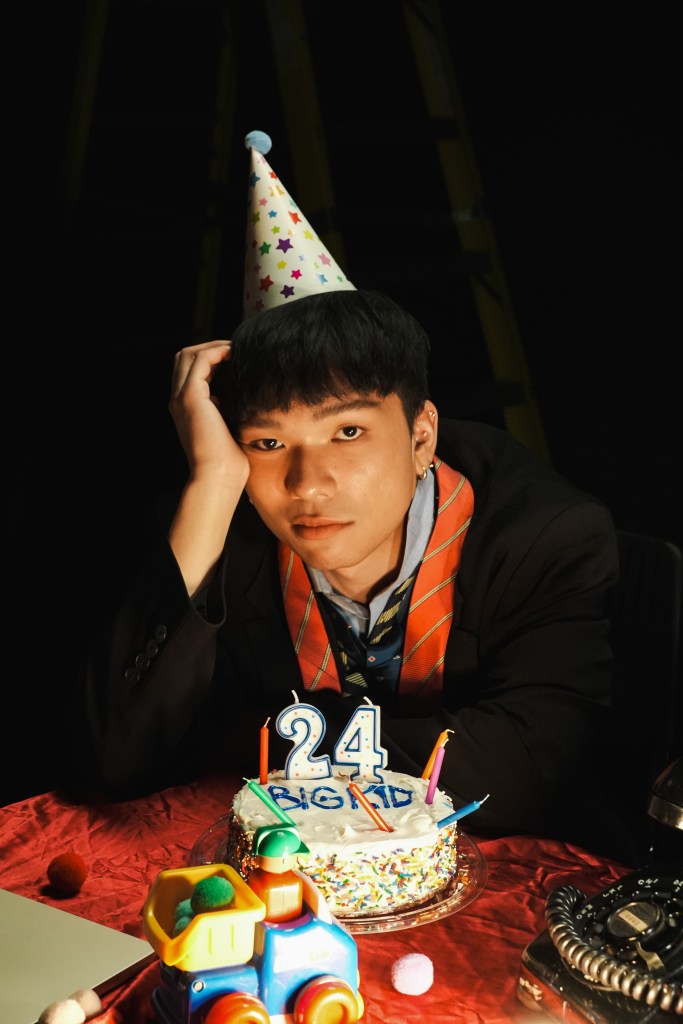
Looking back, is there a particular moment in your career that feels especially memorable or meaningful to you?
This is from earlier in my career. When I was 15, I self-recorded and produced my first EP and sold CDs at my school. I wouldn’t let anyone hear it today, but I think it was that drive and discipline that I instilled in myself at that age that allowed me to get to where I am today. I want to thank younger me for being delusional and chasing after what he envisioned for himself. I feel like I’ve already lost a lot of that, and BIGKID is also about rediscovering that feeling and reclaiming it.
If you could go back and talk to your younger self, what would you say?
Keep going. Stay true to yourself.

With BIGKID out now, how do you see yourself evolving as an artist? What’s next for you?
I have so much in store for you. BIGKID felt like a reflection and a journal that I needed to document in order to process events that happened in my life. But now I have so much to talk about from my more recent years and what I’m currently going through. There are also so many different sounds that I’ve experimented with over the years, and I can’t wait to share them with you. You should be hearing something new from me as soon as this summer.
For anyone who connects with your story, what message would you like to share with them?
You’re beautiful, you’re not alone, and you’re special. God bless you.

Once again, we would like to express our heartfelt gratitude for your precious time and for sharing insights about your journey. Thank you so much. On behalf of the entire team at Hallyuism, we wish you all the best for your future projects and lots of love from India!
We hope you all loved reading this interview as much as we loved conducting it. Let us know your thoughts in the comments below.


This interview was so heartfelt. ‘You’re beautiful, you’re not alone, and you’re special’ is such a comforting message. Thank you, Himang, for creating music that makes people feel seen and understood. 🇰🇷❤️🇮🇳
I like his music because it doesn’t feel loud or forced, it’s very calm but still manages to hit emotionally. There’s this quiet depth in his songs that I really connect with, like he’s putting feelings into words that are usually hard to explain. It’s not just about the sound, it’s more about the mood he creates,it feels a bit introspective, a bit comforting, and a bit heavy at the same time. I think that’s why I keep going back to his songs, because they just stay with you even after they end.
Himang’s whole personality is so versatile. Such diverse cultural influence on his personality must reflect in his art . His aspiration of being multifaceted & engaging in multiple art forms is so refreshing. Him performing with jay park os a really a big thing. Good to see he’s able to show his own experiences in his art form. Wishing him a good and long career ahead 🫶
This is such a sweet interview! I was in to know his story but ended up getting comforted. Much love from Delhi
Such an inspiring story! 🥺 Growing up balancing so many beautiful cultures must have given him such a unique perspective on life. Love how he channels all those emotions into music that people can actually find comfort in. Can’t wait to check out more of his work! 🔥
What a beautifully honest interview! Loved how Himang described his music with colors and the meaning of cheongchoon – youth like spring blossoms. His mix of Indian roots, Korean identity, and global sounds is so unique and refreshing. You can really feel the earthiness and sincerity he talks about in his songs. Such an inspiring artist to watch, rooting for him!
His words regarding the part talking about the challenges felt so relatable about how the lack of reassuring feedback does make him feel doubtful about himself, but at the same time remembering that “having to create what needs to be created”. To add on to that, if something does exist to have a creation, it will always find its way to the ones who will appreciate it. Like, how I appreciate his song Shooting Stars. Hwaiting to him!🤍