Writer: Ayesha Zamar (Delhi, India)
Editor: Prachi Vaid (Delhi, India)
Have you ever heard the idiom “born with a silver spoon in one’s mouth” and wondered what does a spoon have to do with someone’s birth? Or listened to BTS’s song “Silver Spoon (뱁새)” and thought why is BTS singing about a type of spoon and how is that relevant? Well, the reason behind these unpredictable interpretations can be understood from the following perspectives.

RE-INTRODUCING SPOONS
If you watch a K-Drama focusing on the protagonist’s hardships or a street interview where a student is talking about the struggles of becoming successful, you will easily come across the phrase “수저계급론” (Sujeo Gyegeumnon), which basically means the “Spoon Class” Theory. This is an unconventional way to sort people – not through titles, incomes, or positions, rather by focusing on the material of the spoon that they are allegedly “born with’’.
This seemingly unserious metaphor, however, focuses on a very crucial argument that a person’s success is less defined by one’s efforts and hard work and more by the wealth and social position of the family that they are born into. The Spoon Class Theory is not part of any formal classification system; rather, it reflects a cultural phenomenon where people feel that inherited connections and wealth are more valued than personal achievements.
ORIGIN OF THE SPOON CLASS THEORY
The theory is a metaphorical derivation from the English idiom “born with a silver spoon in one’s mouth,” which is rooted in the history of European nobility, where infants were fed with silver spoons as a marker of their social status. In the South Korean context, the theory further expands: from a single practice that distinguishes the rich from the poor to an elaborate system of classification in which different social classes are assigned their specific type of spoon. The reason for its origin was the growing concern among the South Korean population about the unwarranted benefits of inherited advantages and the declining value of meritocracy.

ROLE OF ONLINE COMMUNITIES
The increasing dissent related to economic dissatisfaction led to the emergence of discussions on online forums, social media, and various online tabloids where people shared their views on youth unemployment, mounting housing prices, widening gap in economic inequality, and educational competitions. Such conversations in the online communities eventually led to the widespread popularity of the “Spoon Class” theory in 2015.
Therefore, it is imperative to understand that young adults as well as the unemployed youth of that time felt that the economic conditions of South Korean society were prioritizing birth and familial circumstances more than individual merit. It is this collective feeling that led to the origin and gradual development of this phenomenon.
CLASSIFICATION OF SPOONS & THEIR INTERPRETATIONS
The Spoon Class theory is not just an isolated theory, it categorizes individuals, groups and communities according to the socio-economic circumstances in which they take birth. It further delves into an elaborate hierarchy of classes. The spoons represent different classes on the basis of the financial resources, educational and employment opportunities and social connections that are built as a result of the family’s support.

The classification of the Spoon Class theory are as follows:
- Gold spoon (금수저) – This refers to individuals born into influential, elite families of rich conglomerates, commonly known as “재벌” (Chaebol). These individuals have access to massive financial as well as social resources.
- Silver Spoon (은수저) – This category indicates upper-middle-class origins with notable parental wealth (e.g., annual household incomes around $400,000–$800,000 and assets of $2–4 million), enabling advantages like private tutoring and elite university access.
- Bronze Spoon (동수저) – An intermediate level for those from working-class or modestly stable households, offering basic but constrained opportunities compared to higher tiers. It basically refers to middle-class families.
- Dirt or Mud Spoon (흙수저) – It holds the lowest place in the hierarchy as it indicates low-income households that have very limited wealth as well as other educational and social resources, creating barriers for growth.
SIGNIFICANCE AND ACCURACY OF THE THEORY
This metaphorical framework developed approximately two decades after the 1997 Asian Financial Crisis, a shocking event that reshaped various employment norms and changed South Korea’s job market. The society that initially praised merit and hard work slowly became highly competitive and less predictable, whereas the socio-economic dynamics changed rapidly. Earlier generations embraced the proverb “a dragon rises from a small stream,” which symbolizes that hard work and determination help to overcome humble beginnings.
However, the Spoon Class theory presents a contradictory idea, which does not claim that success is impossible without inherited advantages but reiterates that some people get a head start in life, and it has considerable effects on the available opportunities.
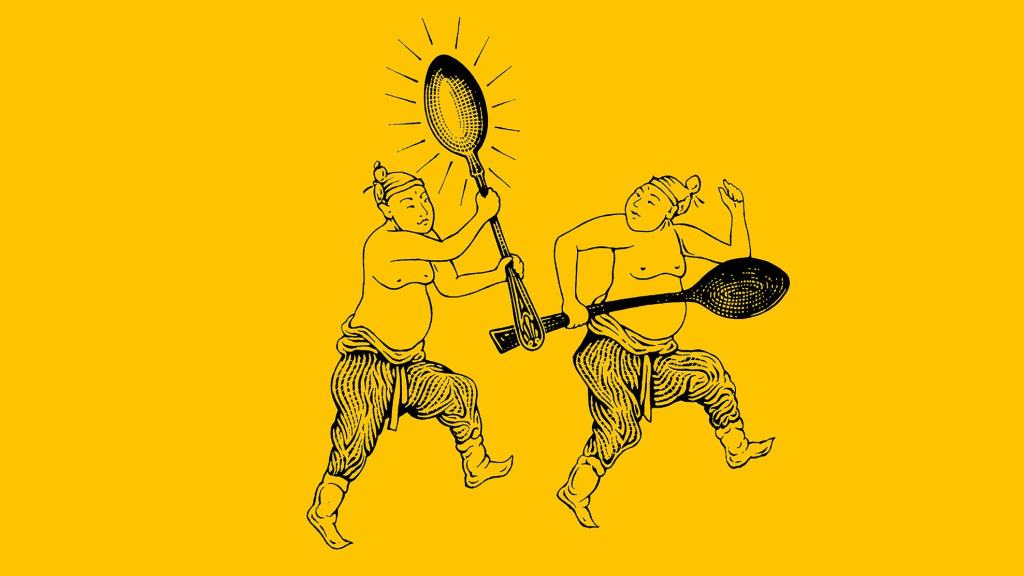
The spoon metaphor gave people a shared vocabulary for the shift that people observed in society. It is important to note that this kind of open, humor-laced talk about class is itself a sign of a healthy public discourse. Moreover, it is significantly appropriate to understand the Spoon Class theory as a subjective interpretation of the class system in South Korea rather than considering it to be a formal objective method of classification and hierarchy.
Some studies suggest that the idea of increasing social inequality has become widely influential among the youth, whereas other studies claim that although there are inequalities here and there, this theory may have been an oversimplification of the complex and multi-faceted nature of social mobility, availability of opportunities, economic conditions, and public policy.
CONCULSION
The Spoon Class Theory is a highly debatable idea as it is subjective and has emerged as a result of social discourse. Although it is easy to label this theory as negative and distressing for society in today’s time, on the contrary, it is more important to understand how the playful and humorous nature of this theory creates a unique perspective of looking at changing social conditions and talking about it openly in public without causing alarming dissent.

The theory initially developed as an internet expression but gradually turned into South Korea’s widespread social metaphor. The universality of this theory is also commendable – even though it originated in the socio-economic environment of South Korea, it can be useful to understand social class and status anywhere around the world. The theory’s idea of questioning inherited advantages and declining appreciation of meritocracy is a sign of healthy freedom of expression and public vigilance.
Do you think the Spoon Class Theory accurately reflects modern society? Let us know what you think.


Such a thoughtful and beautifully written piece. I really enjoyed reading it.
Really interesting read! I’ve heard terms like “gold spoon” and “dirt spoon” in Korean content before, but this article helped me understand the deeper meaning behind them. I especially liked how the spoon metaphor reflects the growing gap between inherited advantages and individual effort. It’s a simple concept, but it says a lot about society.
Honestly, yeah to a point. The spoon class theory does a pretty good job of showing how where you start in life (money, family, opportunities) can shape your path more than people like to admit. Not everyone is running the same race, even if it looks like it.
But at the same time, it can feel a bit too black and white. People aren’t just “gold” or “dirt” spoons, there’s a lot of in between, and effort, timing, and luck still matter. So it reflects reality, just not the whole picture.
Such an insightful article! Keep it up Ayesha 🙌