Interviewer and Editor: Pooja Vishwanathan (Jhansi, Uttar Pradesh, India)
Some conversations feel quiet, but stay with you for a long time.
Meet Seonmi Kang, a Korean artist who uses her paintings to explore a quieter understanding of relaxation. Her work draws from nature and, in a way, tries to hold onto that sense of healing we often overlook, both in the body and within ourselves. The idea of “self” stays close to what she creates. Her paintings feel like spaces you can step into, sometimes personal, sometimes more open, but always gentle.
Seonmi’s artwork establishes “nature” as its main essence. This creates a specific emotional atmosphere for viewers. She offers a tranquil environment through soft landscape patterns, such as wide open spaces and gentle surfaces. Seonmi pursued her MFA at Jeonbuk National University and has displayed her artwork in multiple solo and group exhibitions.
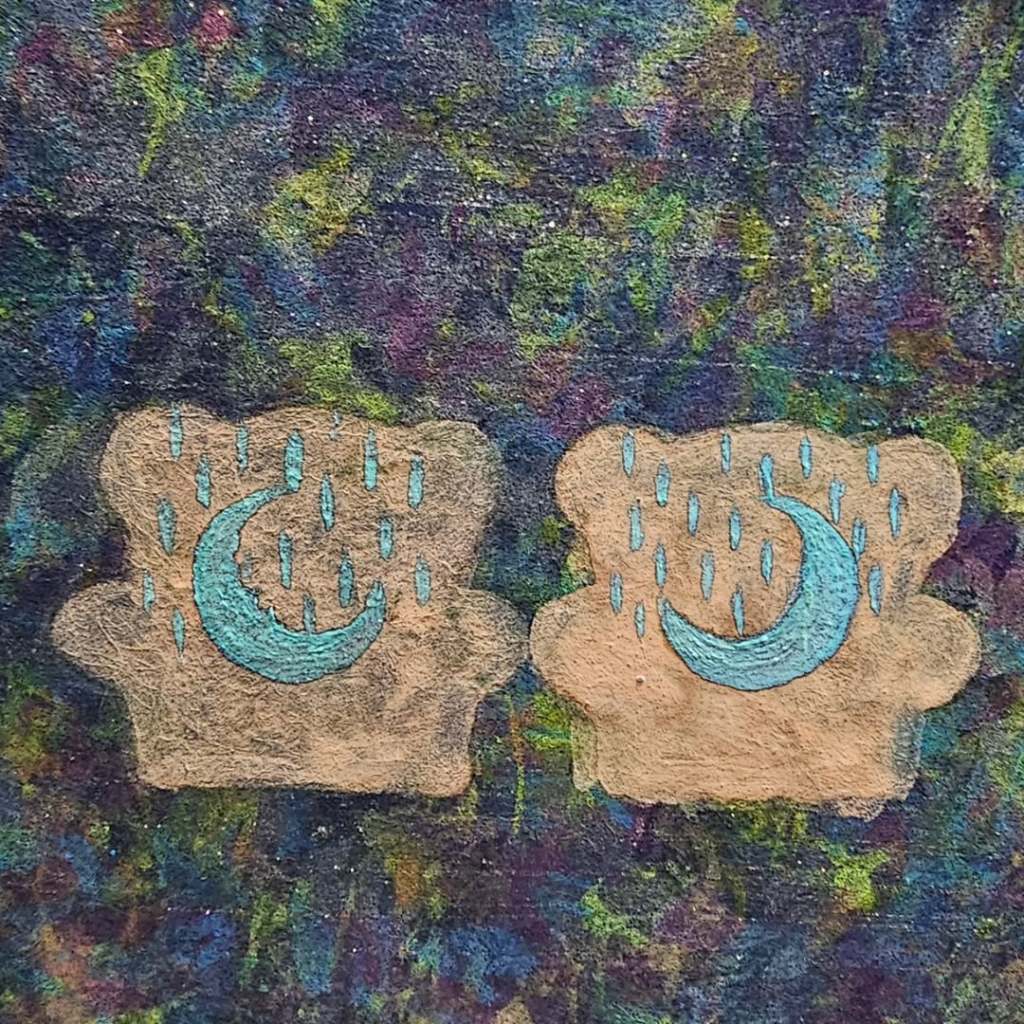
In this interview, we deep dive into her artistic journey and unique creations, which show the moon as a silent companion, space as a place to relax, and nature as a constant presence throughout her creative process, where they form a gentle surrounding through their combined existence, and resemble a lullaby transformed into visual art.
We also step into the quieter narratives that run beneath Seonmi’s paintings, her process of stillness learned rather than found, and of the invisible threads that connect rest, nature, and the self. Through Seonmi’s lens, rest is not an escape, but a return.

Could you please introduce yourself to our readers and the people who find comfort in art?
Hello, I am Seonmi Kang, a Korean painting artist. I create works that form “spaces of rest.” Inspired by nature, I see its cycles of renewal and regeneration as closely connected to the meaning of rest. Through spaces where the mind can pause and recover, I hope viewers can reflect on themselves and find comfort in reconnecting again.
How did you first get interested in painting? When did that realization hit about creating something creative?
I have enjoyed drawing since childhood. I used to express my introverted thoughts and emotions by doodling images and writing down ideas that came to mind. In high school, I began studying art after the encouragement of my art teacher. Over time, I came to realize that creating is not just a simple activity, but an important way of understanding both myself and the world.
During your MFA at Jeonbuk National University, what was that time like for you, and how did it shape you as an artist?
My graduate years were a time when I learned to connect art and education while building the foundation of my own work. It was also a period filled with 고민 about growth. Through various external experiences, I tried to reflect those ideas in my work, and through many trials and errors, it became a turning point where I began to seriously explore the concept of “space.”
Your experience in art education and working with children feels deeply meaningful. How has that shaped the way you understand imagination and creativity today?
Working with children reminded me that creativity is very natural and instinctive. They express themselves freely without fear or judgment. This experience led me to focus less on controlling outcomes and more on expressing honesty through what I feel visually and emotionally.
We have seen you integrate many elements from nature, especially the moon, into your artworks. What about the moon fascinates you? Is there a special connection you feel with it?
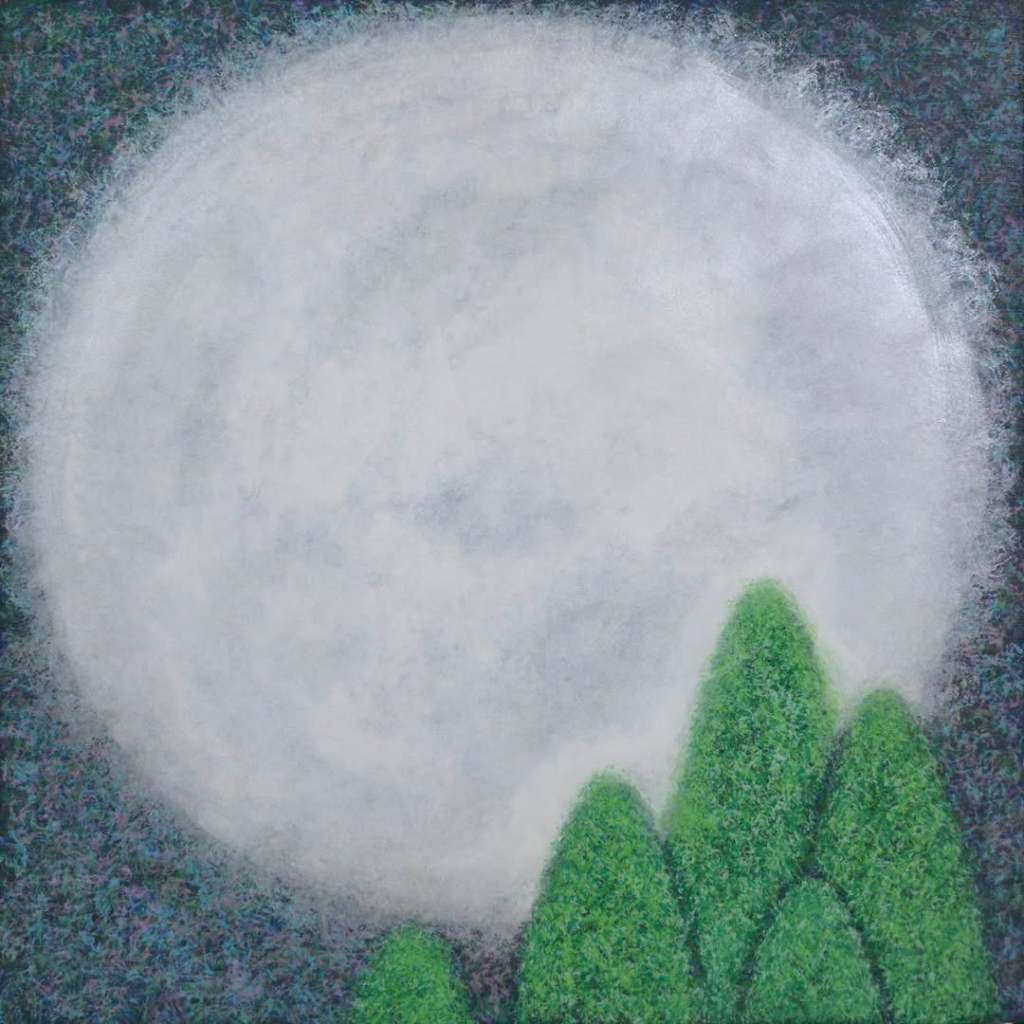
The moon was like a “wish box” to me in childhood. Seeing it alone in the night sky, quietly shining, I felt its cycles of change and recovery. The crescent moon suggested beginnings, while the full moon carried a sense of mystery and energy. It was a small but deeply meaningful presence to me—like a quiet companion I could rely on when making wishes.
Words like “rest” and “space” hold different meanings for everyone. How do you interpret them, and how do they come through in your paintings?
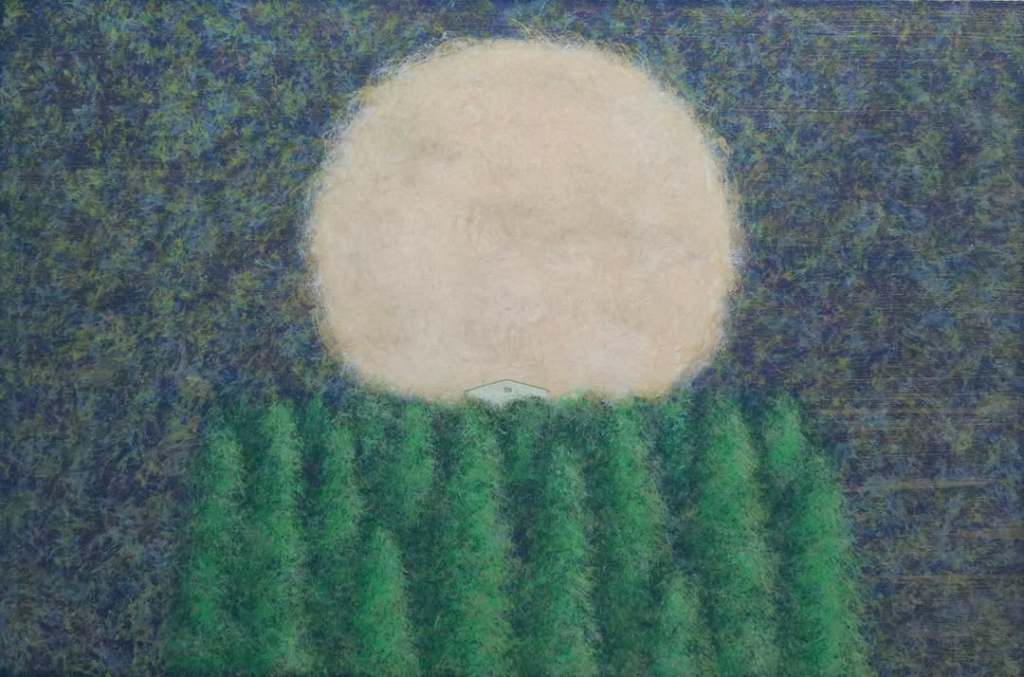
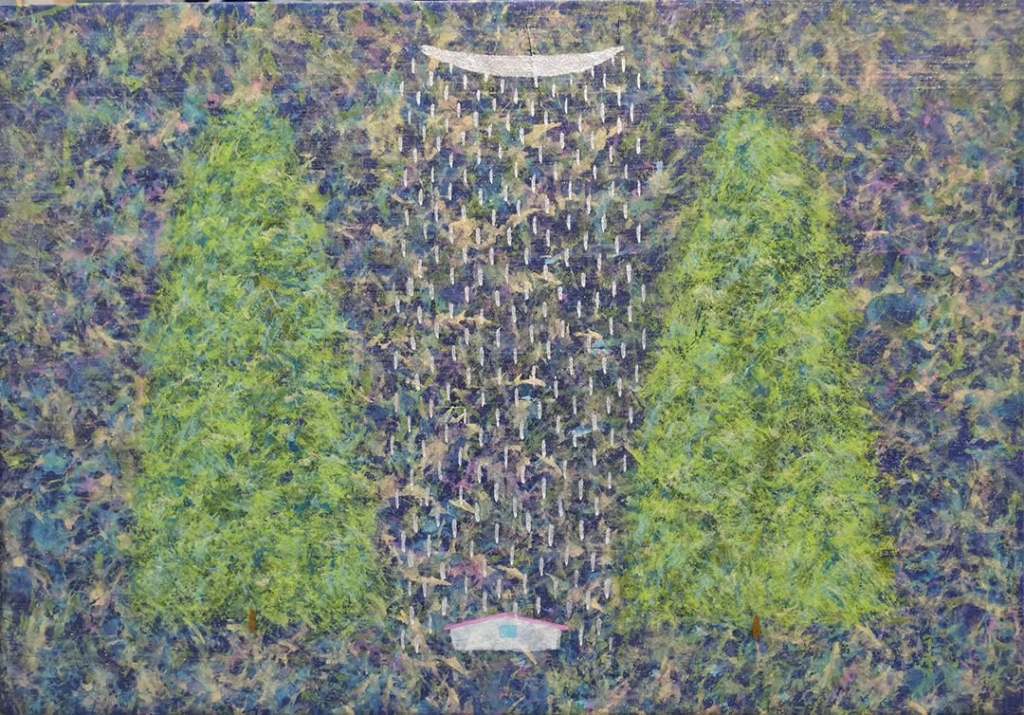
To me, rest is not simply stopping, but a state of emotional recovery. Space is where that rest takes place. In my work, I try to convey this through empty space, colors drawn from nature, and simplified forms, creating an atmosphere where one can stay, pause, and rest.
People often turn to music, books, or poetry when they feel lonely or overwhelmed. How did you find your calling in something that began as a personal space and has now turned into a shared community?
When I work, I tend to pour my emotions onto the surface. I believe that the results that emerge from expressing and refining these emotions can expand into empathy when viewers encounter shared feelings or experiences—much like shedding tears while listening to a sad piece of music.
Could you please walk us through your process of creating an artwork from beginning to end? How do you execute your work, and which themes do you mostly focus on?
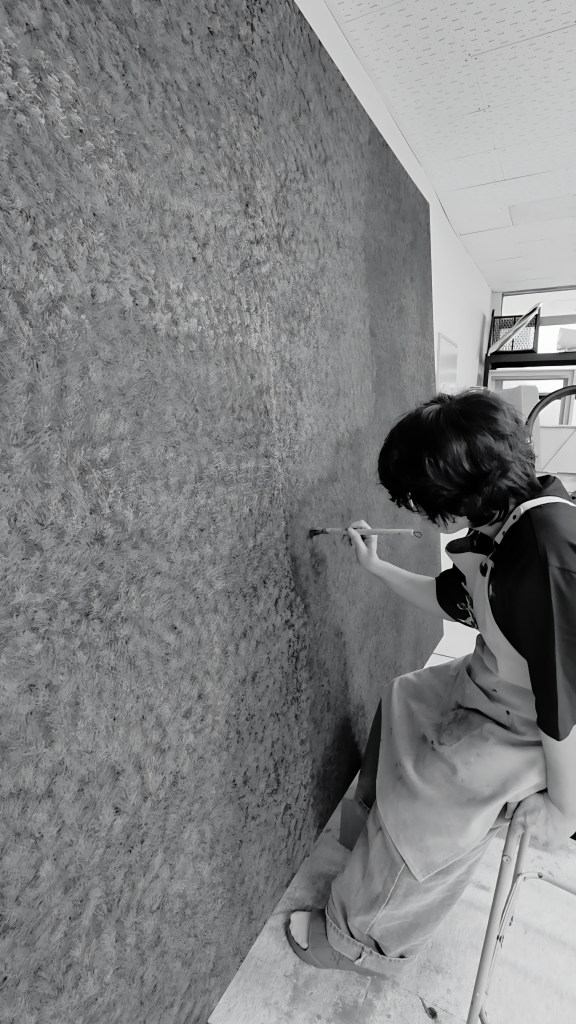
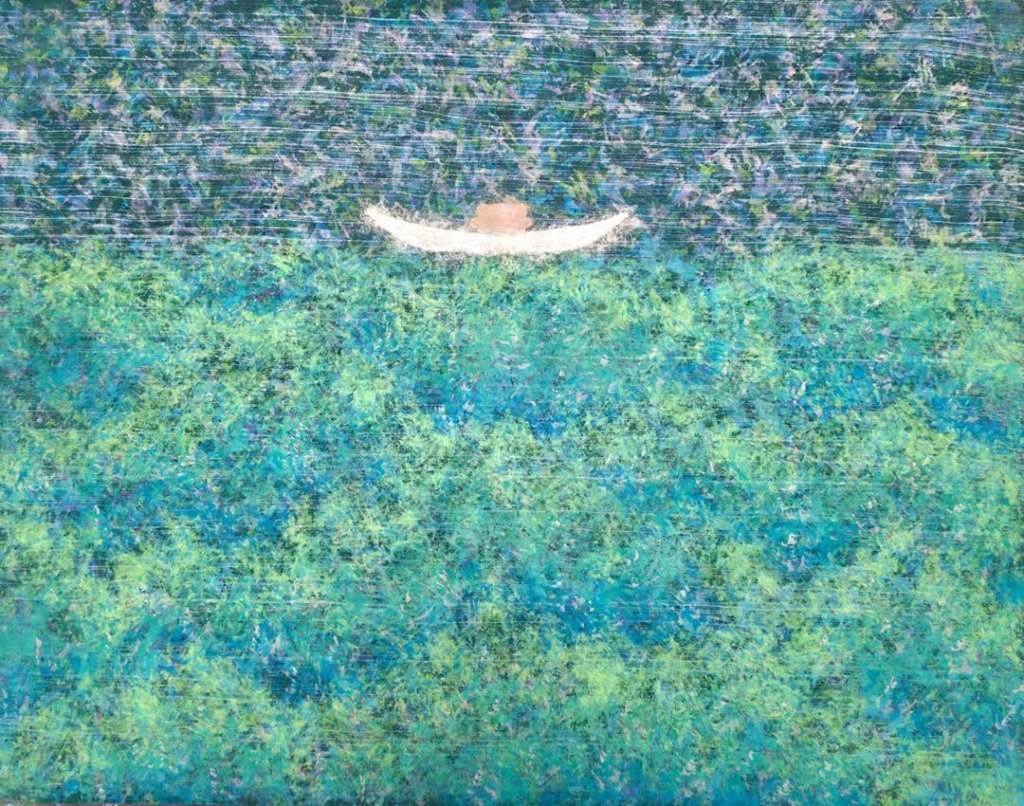
I begin by mounting traditional Korean paper, hanji, onto a panel. I then apply animal glue diluted with water onto the hanji, and after it dries, I paint a base layer. This process takes about three days. After that, I fill the surface with imagery I have envisioned. I build up colors inspired by nature, recalling moments of rest I have experienced. These are translated into simple forms, along with harmonized colors and spatial textures. My main themes are rest, nature, and inner space.
You use bunchae pigment on Jangji. What drew you to these materials, and how do you visualize each piece before bringing it onto paper?
Bunchae and Jangji are traditional materials used in Korean painting. I am drawn to them because they allow for soft yet deep expression, which suits my work well. As hanji absorbs and releases pigment, it builds subtle layers of color, creating a calm surface. I develop my compositions through many sketches, studying forms and observing colors found in nature.

Themes like “self-love” and “acceptance” have been expressed often through music. How do you think painting recreates that idea of “self” and brings a sense of positivity when we look at it?
Painting can be expressed through various materials, even with just a single pencil. It allows emotions to be freely released or quietly condensed. Through this process, viewers project their own feelings and experiences, which can lead to self-acceptance and comfort. In that sense, I believe painting is not very different from music.
Is there someone from the world of art whom you admire or whose work influences you the most?
I am influenced by artists who convey deep emotions through simplicity. I especially admire Jang Wook-jin. His work is simple, but there is much to learn from the way he expresses emotions and meanings in a concise and honest way.
How do you think viewers connect with your paintings? What intention do you create with, and do you hope for a shared sense of feeling?
I believe everyone has their own space of rest. I express the energy I feel in nature as such a space, and I think a connection is made when viewers feel comfort or empathy while reflecting on their own space of rest within the work. Rather than presenting a fixed interpretation, I aim to create a space where each person can hold their own emotions.
As an artist, have you encountered any obstacles along the way? Looking back, how do you think they’ve shaped you over the years?
There are always concerns and uncertainties about the direction of my work. However, I believe these concerns are what allow me to keep going. There is a saying, “Stagnant water rots.” Continuously discovering and exploring new things becomes the driving force that helps my work grow and stimulates my emotions.
Were you always interested in painting from your early days, or is it something you developed over time and wanted to pursue?
I loved picture books as a child. I was fascinated by how drawings could express stories and emotions. I also found it interesting that the same subject could be expressed differently by each person. Through study and experience, I came to realize that art is not just an interest, but a direction in life.
Lastly, what would you like to say to everyone who loves painting, admires art, or wants to begin their own artistic journey?
I don’t believe there is such a thing as perfect art. Rather than trying to analyze and understand everything logically, I hope people can feel, communicate, and express through emotion. Instead of following trends, it is important to spend time reflecting on what you truly want to express and continue exploring it.

Once again, we would like to express our heartfelt gratitude for your precious time and for sharing insights about your journey. Thank you so much. On behalf of the entire team at Hallyuism, we wish you all the best for your future projects and lots of love from India!
We hope you all loved reading this interview as much as we loved conducting it. Let us know your thoughts in the comments below.


There’s a beautiful sense of creativity here, with every element blending so naturally and telling a quiet story❤
The simplicity & uniqueness of Seonmi Kang ‘s creativity reflects in her paintings very well 🌺”Nature” being her main essence is so grounding & peaceful. She personified moon as silent companion is so creative 😍The thought that art is not just a simple activity but an important way to understand ourselves & world is so meaningful 🫶
After reading this article I realised that a person could be so imaginative and thoughtful about nature .Her way of thinking and turning her thoughts in the paintings had really impressed me !
Seonmi Kang’s work feels really calming and thoughtful. I love how she uses nature and empty space to create a sense of “rest” rather than just visual beauty. Her idea of painting as emotional recovery really stays with you