Writer: Yashita Thakur (Delhi, India)
Editor: Prachi Vaid (Delhi, India)
South Korea values tradition and respect, especially for those who came before us. Remembering and respecting ancestors is central to Korean culture. This remembrance is expressed through the tradition of Jesa (제사). Many of us have briefly encountered this practice while watching K-dramas, where families gather around elaborate tables of food and bow to show respect. The tradition of Jesa shows respect and gratitude toward one’s ancestors and helps preserve one’s culture and identity.

The practice of Jesa is an ancestral memorial rite that is performed to commemorate one’s departed ancestors and to express the family’s gratitude and respect toward the departed. The term “Jesa” (제사) can be understood as “제” (offering food) and “사” (praying to spirits). It is a ritual that is performed with the utmost sincerity. The origins of the tradition date back to a time even before the spread of Confucianism in Korea, when Koreans practiced offerings to spirits. During the time of the Goryeo dynasty, the practice became more structured and formalized. It was during the period of the Joseon dynasty that the tradition of Jesa became an integral part of Korean society and culture.
TYPES OF JESA
The ceremony of Jesa is not only about showing gratitude but also about seeking blessings and a spiritual connection from the ancestors. Instead of viewing death as the end of a relationship, the practice of Jesa reflects the belief that the relationship and spiritual connection transpire beyond generations.
Jesa is usually practiced in two forms—one as Gijesa (기제사). This form of Jesa is held to commemorate a specific ancestor and is held on the date of their death anniversary, according to the lunar calendar. It is believed that on this day, the ancestors return to their homes, and thus, family members gather to prepare ritual offerings and bow.
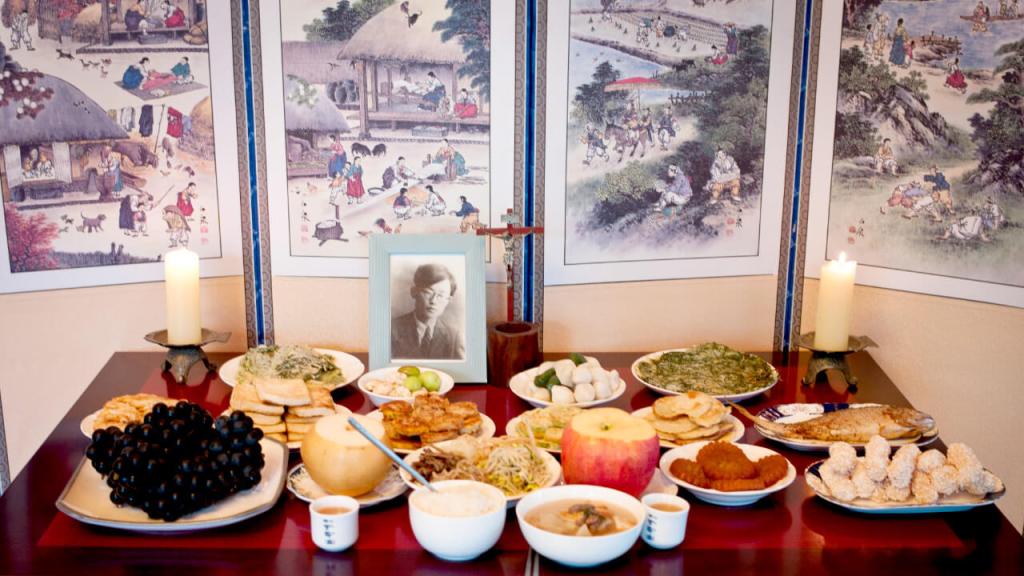
While another widely practiced form of Jesa is Charye (차례), this Jesa is not held for any specific ancestor but for all ancestors. It is performed particularly during the transitional Korean holidays of Seollal (설날) or Chuseok (추석). It is a ceremony where the family prays for abundance and blessings.
THE PREPARATION OF THE JAESASANG
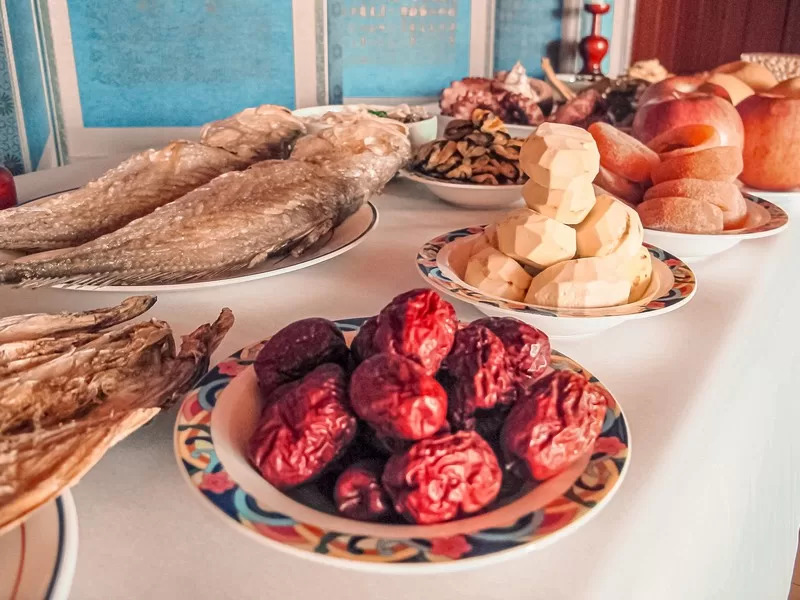
One of the most important aspects of Jesa is the arrangement of the Jaesasang (제사상), which is the main ceremonial table on which all the offerings are set up. The Jaesasang (제사상) is carefully prepared and set with food. Every food offering has a specific placement, such as red fruits and fish being placed in the east, while the meats are placed to the west.
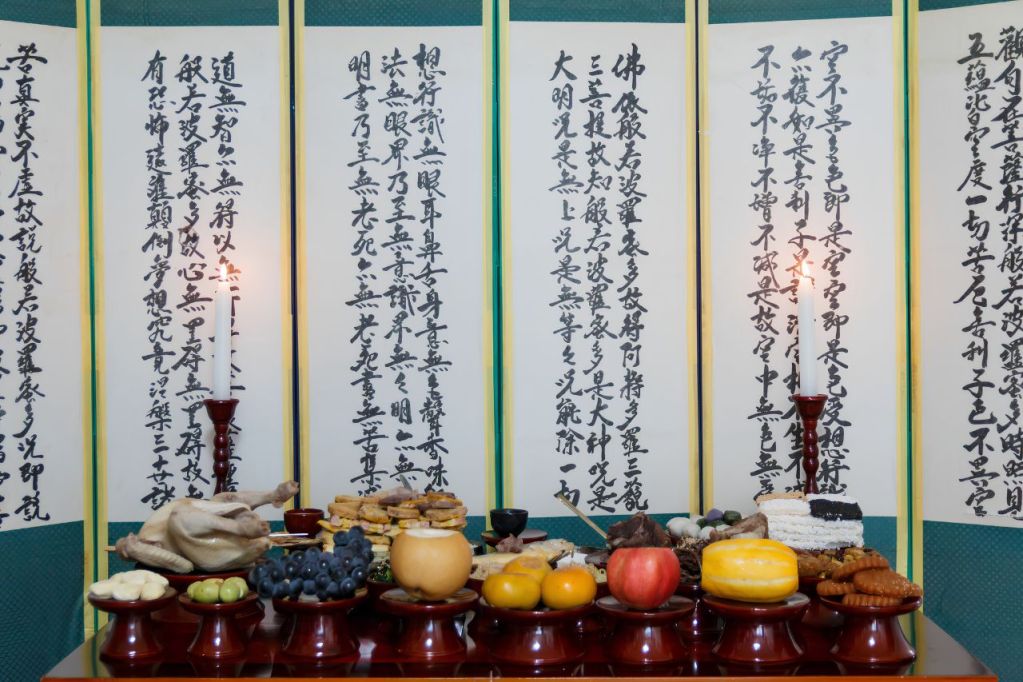
Foods that have garlic, chili, red beans, and peaches are avoided, as some traditions suggest that such strong-smelling items may interfere with the clean and respectful nature of the ritual. A Shinwi (신위), which represents the ancestor, such as a wooden tablet or a photograph, is set up in the middle of the table.
The ceremony of Jesa is carefully prepared, and each and every offering and element involved has a deep meaning and symbolism. Jesa consists of three important elements: The Hyang (향), the Sul (술), and the food (음식).
BOWING BEFORE THE ANCESTORS
The ceremony traditionally begins with the lighting of the Hyang. The fragrant smell is said to create the path that calls the ancestors’ spirits home. The sul (술) is the most significant offering in the ceremony. The sul (술) is the gesture of welcoming the ancestors. It is poured three times. The eldest male descendant of the family makes the first offering. The offering of the food is the most elaborate aspect of the Jesa. The family bows in remembrance and quietly shows respect and gratitude towards their ancestors. The family bids farewell to the ancestors by extinguishing the Hyang. The food that was offered to the ancestors is considered blessed and is shared among the family members, symbolizing the blessings from the ancestors.
A LIVING HERITAGE
As Korean society has become more modernized and evolved, so has the practice of Jesa. To fit their busy lifestyles, many families now simplify the tradition. Despite the changes, the essence of Jesa remains unchanged. The practice of Jesa is not only limited to offering food to the ancestors, but it is also about connecting with and being grateful to the departed.

Jesa serves as a very important tradition of preserving Korean culture and identity, being appreciative of where one comes from, and ensuring that the beautiful culture and values are passed down to future generations. Have you witnessed a tradition similar to Jesa in your own culture? Do share your experiences with us in the comments below.

