Writer: Aakriti Lokhande (Pune, Maharashtra, India)
Editor: Ankita Panda (Kolkata, West Bengal, India)
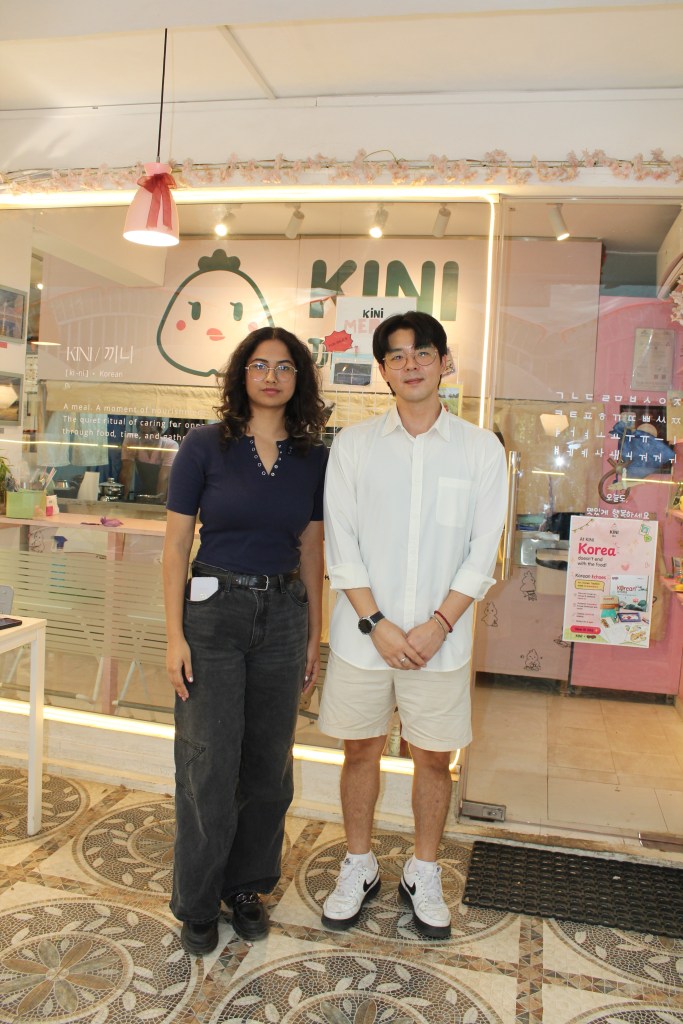
끼니 (Kini), translating to a daily meal or mealtime but carrying the deeper sentiment of “a meal made with warmth and care,” is bringing a quiet slice of South Korea to Pune. Nestled in the leafy, vibrant lanes of Koregaon Park, this understated spot has rapidly transformed from a hidden gem into one of the city’s absolute go-to destinations for authentic Korean food.
Picture Credits: KINI via (Instagram)
The owners, Jun and Jin Kini, aren’t just serving Korean food—they are sharing a piece of Korean culture through the food, the space, and nearly every small detail in between.
Address: Ashirwad Bungalow, Ground Floor, Lane No. 5A, S Main Rd, Koregaon Park, Pune, Maharashtra 411001
Phone: 089996 25407
AMBIENCE
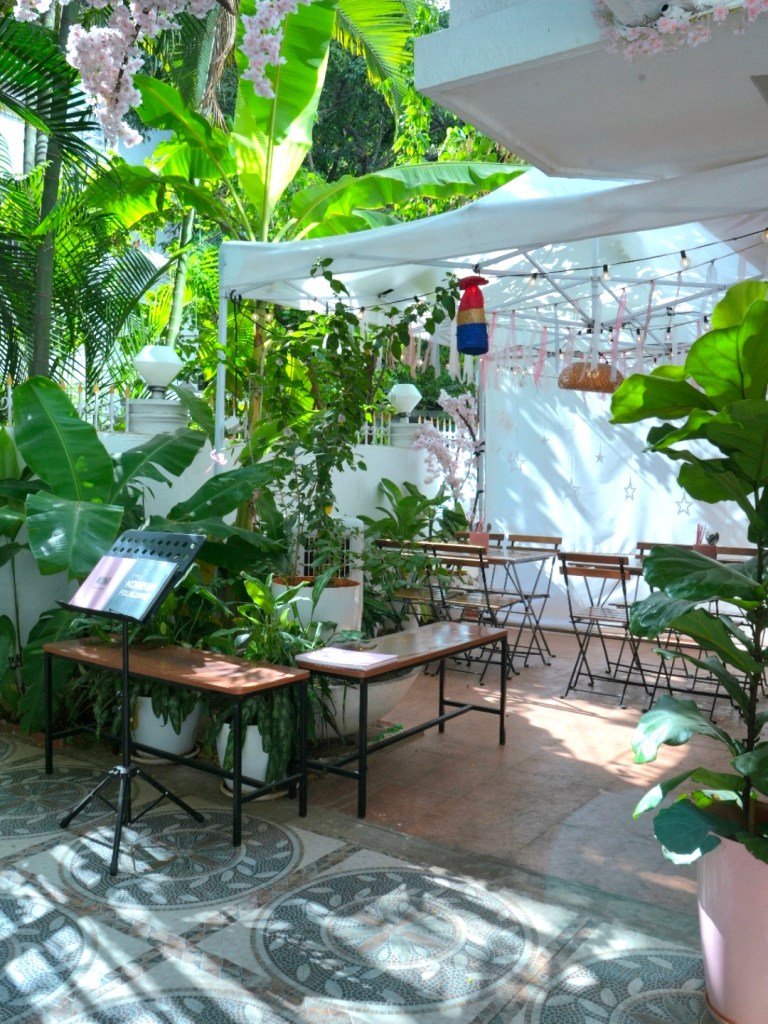
Step in and the space does much of the talking before the food even arrives. A white-and-pink storefront announces itself; warm pendant lights hang over an open courtyard strung with fairy lights, dotted with umbrellas and plants, and scattered Korean folk-craft decorations swaying overhead.
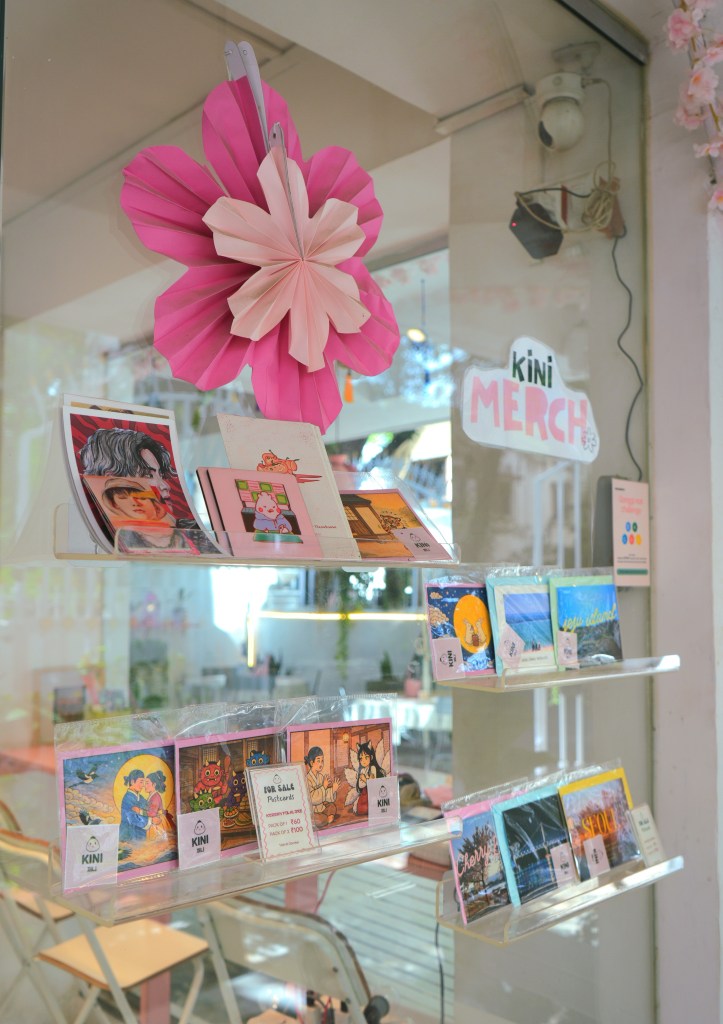
The merch counter nearby, with totes and stickers, carries fragments of Korean folklore pulled from Kini’s own menu book, feeding into an online community the café calls “One of a Kini,” and the Jun & Jin recommendation series on Instagram that grew out of the same instinct: not just serving customers, but giving people a way in. The result doesn’t feel like a themed restaurant; it feels like its own place, with its own identity, that just happens to be Korean.
THE FOOD
The dishes I tried at KINI were:
Kimchi Jjigae (김치찌개) was a tangy, flavorful burst, a deeply comforting stew, the kind of dish that doesn’t need convincing. I loved it exactly as it came, though next time I’m asking for a spicier version.
Bibimbap (비빔밥) is the one I’d reach for on a day I want to eat clean. It was a well-balanced bowl that feels like a proper meal, not a diet plate.
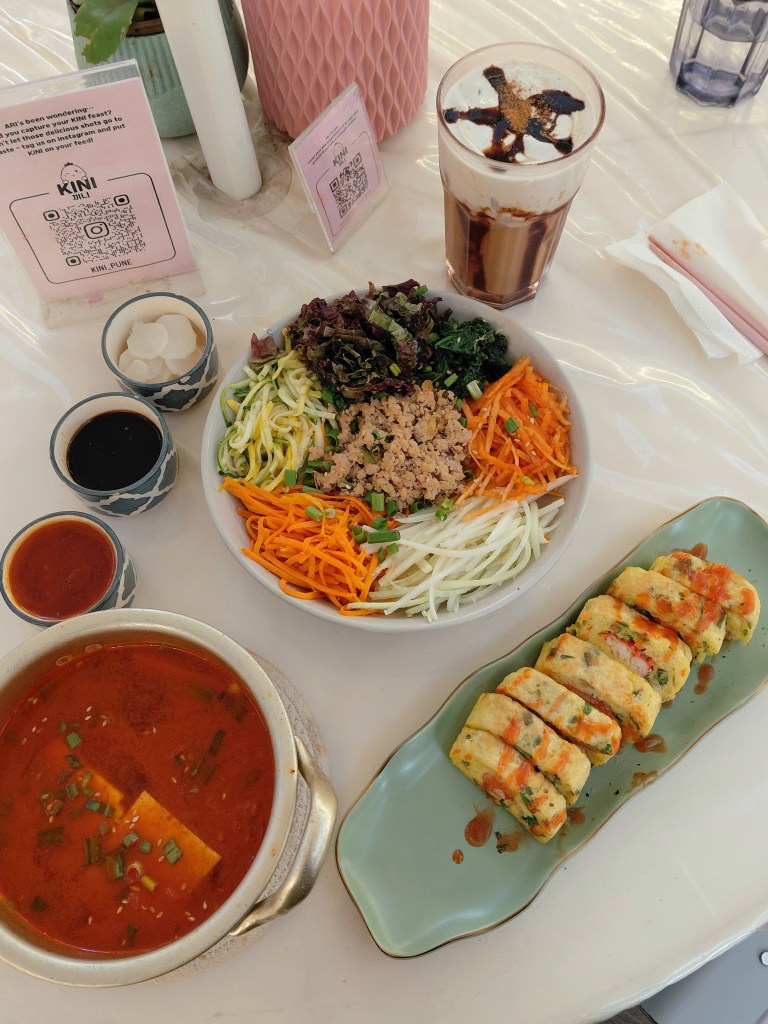
Gyeranmari (계란말이), the Korean rolled omelette, layered with crab stick, was light, neat, almost delicate—my go-to whenever I need to hit my protein goals
Goguma Latte (고구마 라떼) is Korea’s sweet potato cream coffee. The sweetness of goguma cuts through the bitterness of the coffee underneath. This is the one I order when I want to treat myself.
For Jun, authenticity isn’t about imported ingredients—it’s about technique, understanding how a dish is meant to taste and be delivered. Most ingredients are sourced locally in Pune; gochujang (Korean red chili paste) remains the one exception that simply can’t be substituted.
Having lived in India for nearly two decades, Jun sees real overlap between the two food cultures—both lean heavily on fermentation and pickling. The preference for meat is where the gap widens, particularly for vegetarians navigating a menu rooted in a different culinary tradition.
But adaptation cuts both ways, he points out: it took Koreans roughly a decade to embrace coriander after it arrived via Vietnamese pho. By that logic, Indian palates, like garam masala and other dishes, just need time too.
Instead of a rotating seasonal menu, KINI builds around Korea’s major festivals—Seollal and Chuseok—serving dishes that demand overnight vegetable-broth prep and don’t appear anywhere else on the menu. It’s an acquired taste for most newcomers, but the response so far has been warm.
Even with a full menu, Jun has his own wishlist, starting with gukbap. It is a classic pairing of soup and rice traditionally made with pig or ox bone broth. Sourcing the right meat is the real hurdle in such a vegetarian-heavy market, and some textures, like the seaweed in miyeok-guk (seaweed soup), don’t always land well with first-time eaters. That’s why Kini keeps its seafood offerings deliberately limited for now.
HYBE POP-UP PARK PUNE x KINI
HYBE India was hosting a pop-up park event in Pune and invited Kini to run a stall. Details stayed thin until the week before, and even then, nothing prepared the staff for the scale of it once they walked in—Nongshim running a ramyeon stall, Hyundai with its own merchandise setup, a full Korean-brand ecosystem assembled in one place.
Kini had braced for 3,000 to 5,000 visitors. By the end of the day, over 10,000 people had come through – enough that the kitchen had to restock multiple times within a few hours. What stayed with Jun wasn’t just the numbers, though. It was the people who walked up and spoke to him in Korean, who already knew the dishes by name. He’d known the Hallyu wave was growing in India but hadn’t expected it to look like this.
With more Korean cafés opening across Pune, Jun doesn’t see them as rivals. Korean cuisine is still niche enough in India that every new restaurant brings more people into the fold, each place adding its own specialties to the table—“We are just focusing on doing our best,” he says.
A NOTE TO FUTURE VISITORS
Jun shares one honest piece of advice with future visitors—come with an open mind. What you’ve seen in K-dramas and movies might not match what lands on your plate, but he can promise the quality, hospitality, and the care behind it.
KINI has been getting a steady wave of attention online recently, and rather than let that sit as just numbers, Jun and his team are planning cultural trips and experiences as a way of giving back to a community that’s shown up for them, and discovering a little more of India along the way too.
What’s the first Korean dish you’d order at a café like Kini, or the one you can never say no to? Tell us in the comments.


I think I’d go for tteokbokki first! I’ve always wanted to try authentic Korean street food, and this place looks like the perfect spot to start!